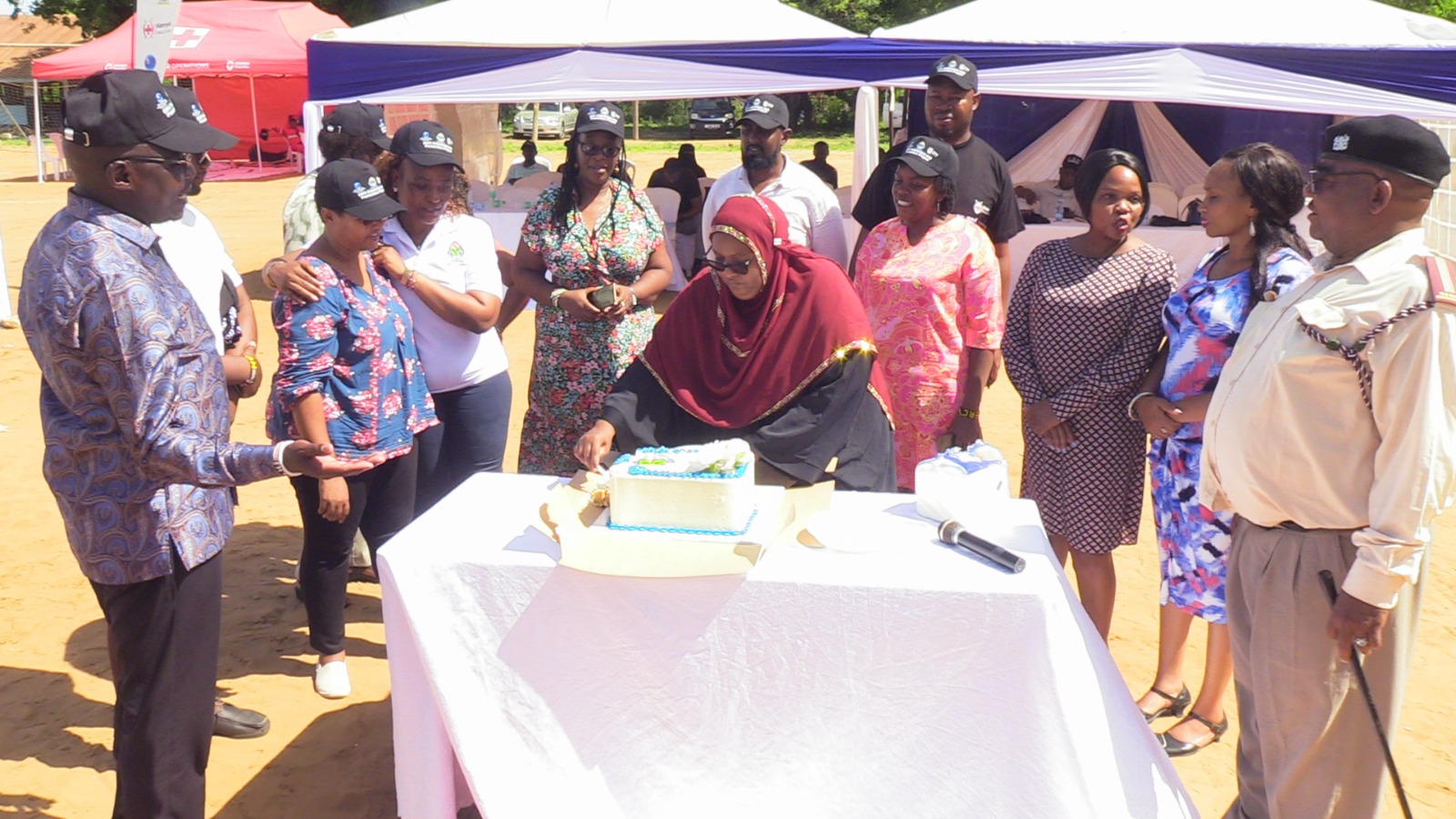
 The Kilifi County Executive Committee Member (CECM) for Gender Dama Masha, the Kenya Red Cross Public Health Manager Wilson Owino, Magarini Sub County Deputy County Commissioner (DCC) Michael Ololtua and the Kilifi County National Gender and Equality Commission (NGEC) officer Beatrice Zighe join residents and officials from the Embassy of Finland in Nairobi during celebration to mark for years of End GBV campaign impact at Mapimo polytechnic grounds in Magarini Sub County, Kilifi County on Tuesday, March, 31, 2026. Photo by Ben Okweingoti.


By Ben Okweingoti.
Cases of gender-based violence (GBV) among women and children in Magarini Sub-County, Kilifi County, have significantly declined following a sustained four-year awareness campaign led by the Kenya Red Cross Society (KRCS) in partnership with community stakeholders.
Officials from KRCS and local anti-GBV champions attribute the progress to increased community awareness and improved reporting mechanisms, noting a shift in attitudes toward harmful cultural practices.
The milestone was marked during the official handover of the programme to the county government at Mapimo Polytechnic grounds in Gongoni. The initiative, funded by Finland’s Development Cooperation and launched in 2022, has now concluded, with authorities pledging continuity.
Wilson Owino, a Public Health Officer at KRCS, said the campaign had made notable strides in addressing forced early marriages, although isolated cases persist in remote areas.
“Cases of early forced marriages have reduced significantly, but there are still pockets, especially around Marereni, that require continued intervention by county teams,” he said.
Owino identified poverty as a key driver of GBV, noting that the programme combined sensitisation with economic empowerment initiatives. More than 900 community champions and Community Health Promoters were trained to identify, report and respond to GBV cases.
“Economic empowerment has enabled many women to become financially independent, giving them the confidence to speak out against abuse,” he added.
At Gongoni Dispensary, a primary referral point for GBV survivors, medical officer Dr George Kalama reported a steady decline in cases, though incidents remain frequent.
“On average, we handle between two and five GBV cases daily, mostly involving children. However, the numbers are lower compared to previous years,” he said.
Kilifi County Executive Committee Member for Gender, Dama Masha, said the county government plans to scale up the anti-GBV campaign across all nine sub-counties. She emphasized the need for inter-agency collaboration.
“The departments of Education, Health and Gender must work closely with the Ministry of Interior to strengthen interventions. We currently have three youth-friendly centres supporting GBV response,” she said.
National Gender and Equality Commission (NGEC) officer Beatrice Zighe urged residents to sustain awareness efforts and work closely with her office to eliminate GBV.
Community testimonies highlight a significant shift in social norms. Paula Katana, a Community Health Promoter from Sabaki Ward, said domestic violence was previously normalized.
“I used to think being beaten by my husband was a sign of love. Through the training, I learned it was abuse. After discussing it, the violence reduced, and I now know my rights,” she said.
Katana added that economic empowerment projects, including poultry and livestock farming, have transformed livelihoods, reducing dependency and vulnerability to abuse.
“Women can now support themselves and participate in savings groups, which has reduced tolerance for GBV,” she noted.
Male anti-GBV champion Gwicha David said engaging men and community elders was critical in dismantling harmful cultural norms.
“In our culture, elders hold significant influence. By involving them, especially under the ‘DHOME’ initiative, they have become key advocates against GBV,” he said.
Magarini Deputy County Commissioner Michael Ololtuaa reaffirmed the government’s commitment to tackling GBV, particularly in remote areas where cases remain prevalent.
“As security agencies, we remain vigilant. Protecting women and children is a priority, and we will not allow such crimes to persist,” he said.
Authorities expressed optimism that continued collaboration between government agencies, community groups and development partners will sustain the gains made in reducing GBV across the region.