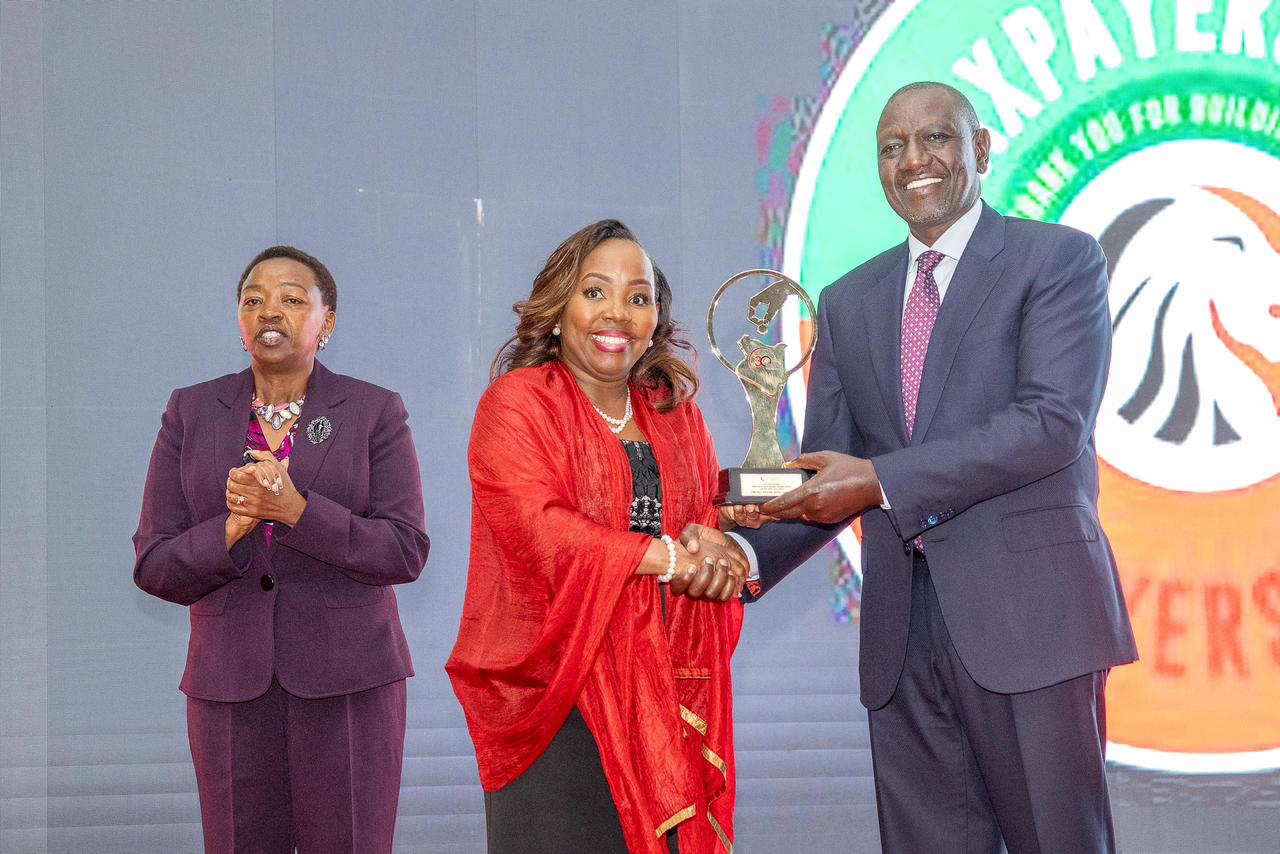
 President William Ruto and First Lady Racheal Ruto during the Taxpayers’ Dinner, State House, Nairobi. Photo by PPS


By Andrew Mbuva
President William Ruto has praised Kenyan taxpayers as the “architects of the Republic,” crediting their daily contributions for sustaining essential national services and powering the country’s long-term development trajectory.
Speaking at the 2025 Taxpayers’ Day Awards Dinner at State House, Nairobi, the President used the occasion to outline a series of reforms aimed at expanding the country’s tax base, improving efficiency, and ensuring that every shilling collected delivers measurable value for citizens.
Ruto noted that over the last 30 years, the Kenya Revenue Authority (KRA) has evolved from a modest revenue office into an institution central to Kenya’s economic sovereignty.
He highlighted the remarkable growth in annual revenue collection—from KSh122 billion in 1995 to over KSh2.57 trillion in the last financial year—and expressed confidence that Kenya is on track to surpass the KSh3 trillion mark this year.
The President attributed this progress to technological innovation, including the integration of KRA services into e-Citizen, the rollout of the government-wide GavaConnect API ecosystem, and the piloting of AI-powered tax risk engines.
These initiatives, he said, have significantly reduced compliance time and improved revenue performance, with customs revenue recently hitting an all-time monthly high of KSh85 billion.
Ruto emphasized that as Kenya navigates global economic pressures—from shifting trade patterns to climate impacts—accountability and value for money must remain paramount.
He insisted that taxpayers should see visible outcomes from government spending and reiterated his administration’s commitment to transparency, fiscal discipline, and sealing revenue leakages.
A major highlight of his address was the new focus on Micro, Small, and Medium Enterprises (MSMEs), which contribute 33% of Kenya’s GDP and employ nearly 15 million people but account for only 1% of tax revenue. Ruto framed this disparity not as a failure but as a vast opportunity.
To close this gap, he announced the establishment of a dedicated Micro & Small Taxpayers Department within KRA. The new unit will serve the 1.2 million MSMEs already in the tax net and support the onboarding of an additional five million, offering simplified processes and personalised guidance. This reform, he said, is crucial in ensuring equitable participation in nation-building.
The President also highlighted the rollout of the electronic rental income tax system—expected to grow revenue from KSh14 billion to KSh80 billion annually—and the introduction of taxpayer services via WhatsApp and USSD to enhance accessibility and compliance.
As top taxpayers were celebrated for their exemplary contribution, Ruto underscored the importance of partnership between citizens and public institutions. He urged KRA to continue modernising its systems, building trust, and serving all taxpayers with efficiency and respect, reaffirming government support to strengthen voluntary compliance.
The President concluded by stressing that Kenya’s success cannot be measured by revenue figures alone, but by the lives transformed through prudent use of collected resources—jobs created, farmers supported, businesses expanded, and improved access to quality healthcare and education.
Marking 30 years of KRA and two decades of Taxpayers’ Day, Ruto called on Kenyans to embrace fairness, integrity, and shared responsibility in building a nation that works for all.