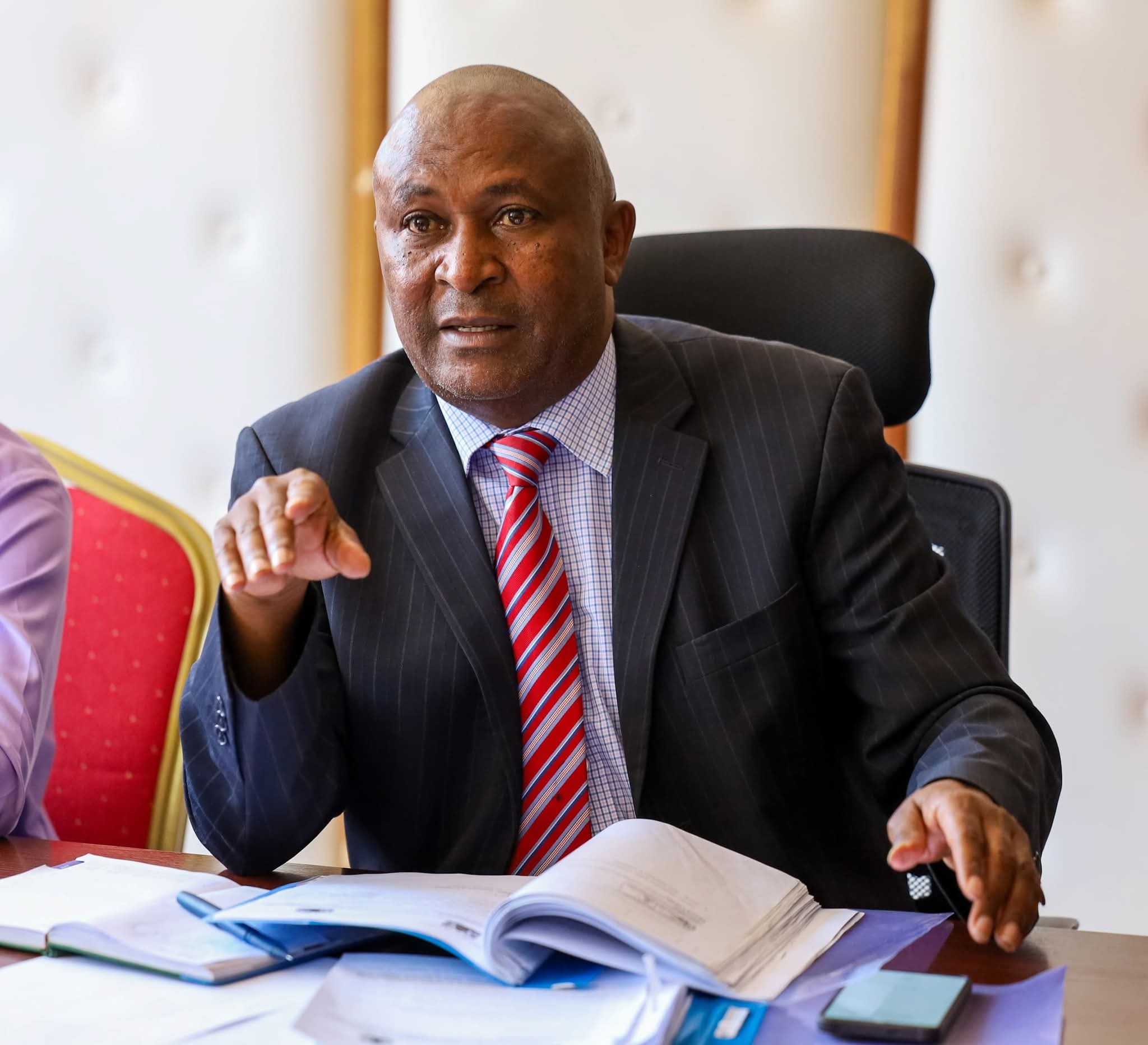
 Millicent Khayanga, the founder of MK Initaitve leads her team during the launch of the men mental hug initiative to commemorate World Father’s day and World Men Mental month in Kilifi town on Sunday, June 21, 2026. Photo by Andrew Mbuva


By Ben Okweingoti.
A youth-led initiative in Kilifi County has launched a campaign aimed at addressing the growing mental health crisis among men, with organizers targeting to reach more than 1,000 men through community-based counselling and awareness programs by the end of June.
The initiative, spearheaded by the Milly Khayanga (MK) Program, seeks to identify men struggling with mental health challenges and connect them with professional support services through what the organizers have termed the “Mental Hug Challenge.”
Speaking during the launch of the campaign, the founder of the initiative, Millicent Khayanga, said the program was introduced during Father’s Day celebrations and Men’s Mental Health Month to recognize the emotional and psychological burdens many men silently endure.
“It is Men’s Mental Health Month and today is Father’s Day. As an initiative, we are supporting men through the mental hug campaign as we seek to identify and address mental health symptoms among men in society,” she said.
Khayanga noted that many men continue to suffer in silence due to economic hardships, stress, and societal expectations. She revealed that during a recent seminar attended by about 200 men, the organizers identified several individuals who required immediate intervention.
“We found 12 men who had mental health challenges. One was suicidal while another was in a severe depressive state. We referred them to specialist psychologists where they are currently undergoing therapy,” she said.
She expressed concern over the increasing number of mental health cases in Kilifi County and called on the government and other stakeholders to invest more resources in mental health services and awareness programs.
Augustine Asada, a director of the initiative, said the stigma surrounding mental health had prevented many men from seeking help, making them more vulnerable to depression, anxiety, and other mental health conditions.
“We are launching the Mental Hug Challenge with a target of reaching 1,000 men by the end of this month. I encourage all fathers and men to speak out and support this initiative. Our message this month is that men must heal and men must talk,” he said.
Medical practitioner Kevin Anungo, who runs the Safe Disposal of Used Diapers initiative in Kilifi County, emphasized the need for a collaborative approach in addressing mental health issues, noting that many families were breaking apart due to untreated mental health conditions among men.
“Through our safe disposal of diapers program, we have partnered with the MK initiative to reach men suffering from mental health conditions in villages across Kilifi so that we can prevent the social consequences associated with mental illness,” he said.
Zedekia Samuel, the team leader at the Kenchic Kilifi branch where the Mental Hug campaign was launched, urged men to openly discuss their struggles with family members and friends instead of suppressing their emotions.
“We are grateful that the MK initiative has come out to support men in distress. I challenge my fellow men, especially the youth, to speak out despite the perception that men should always remain strong. This will help reduce the escalation of mental health problems,” he said.
His sentiments were echoed by boda boda rider Moses Mutuku, who said many men continue to battle family and societal pressures in silence.
“As men, we often pretend that everything is fine even when we are hurting. The more we keep our problems to ourselves, the more we endanger our mental health, which eventually affects our families and society at large,” he said.
The organizers hope that the Mental Hug Challenge will be expanded to all wards in Kilifi County, providing a platform for men to seek support, share their experiences, and access professional mental health services.
Mental health advocates have increasingly raised concerns over the rising number of depression, anxiety, and suicide cases among men, with many experts attributing the trend to economic pressures, social expectations, and the stigma surrounding mental health discussions.