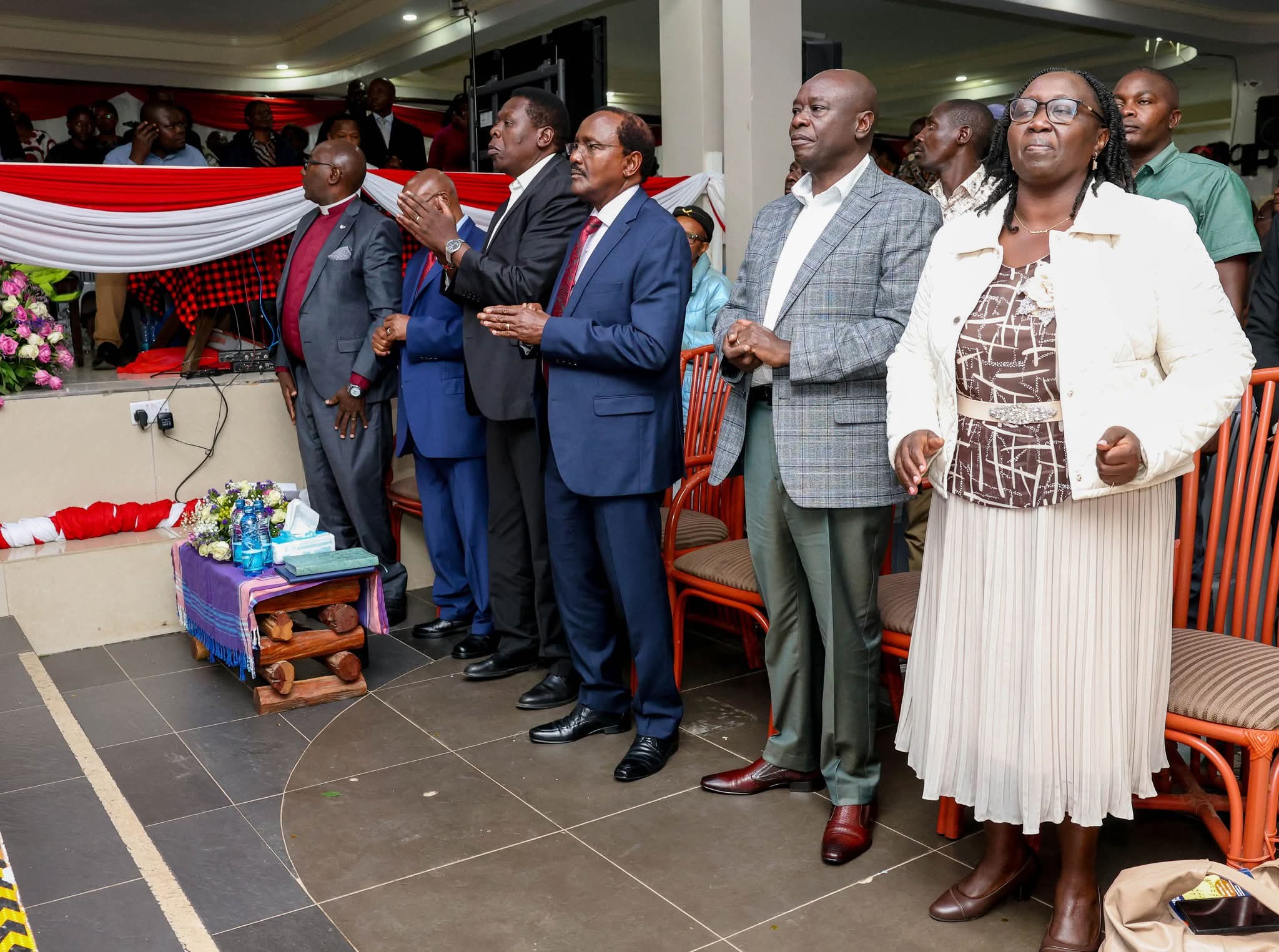
 Opposition leaders Kalonzo Musyoka, Rigathi Gachagua and Eugene Wamalwa at the thanksgiving and retirement service of Rev. Dr. Mathews Kalola at AIC Church Karen in Nairobi on May 31, 2026. Photo Courtesy.


By Andrew Mbuva
Opposition leaders Kalonzo Musyoka, Rigathi Gachagua and Eugene Wamalwa have intensified their opposition to the proposed establishment of a United States-backed Ebola quarantine and treatment facility in Kenya, warning that the move could expose the country to unnecessary health risks and demanding greater transparency from the government.
The leaders spoke on Sunday during the thanksgiving and retirement service of Rev. Dr. Mathews Kalola at AIC Church Karen in Nairobi, where they expressed concern over reports that Kenya could host Ebola-related quarantine facilities amid ongoing outbreaks in parts of Africa.
Wiper Party leader Kalonzo Musyoka said the opposition coalition, under the banner of the United Alternative Government, would formally engage American officials over the matter.
"The position we want to take as United Alternative Government is that on Tuesday we are actually meeting the American Chargé to have a thorough and honest conversation," Kalonzo said.
He argued that while countries naturally pursue their own national interests, Kenya must equally safeguard its own citizens.
"What is always permanent is national interest, and America has been acting in their best national interest. So Kenyan best national interest must be well articulated so that we do not have our people coming to grief because of recklessness," he said.
Kalonzo further questioned reports suggesting that individuals showing Ebola symptoms could be allowed into the country, saying Kenya should not take any risks with a disease known for its high fatality rate.
"Let this thing never even come here. If Uganda have closed their borders, how is it that we are allowing anybody even with the symptoms to be allowed to come into Kenya?" he posed.
DCP Party leader Rigathi Gachagua took a more confrontational stance, arguing that if the United States considers Ebola a serious enough threat to keep infected individuals off its soil, Kenya should not be expected to shoulder that responsibility.
"The United States government has said their citizens having Ebola should not step into their land because of the danger of any possible mishandling that can wipe the entire population of the United States of America," Gachagua claimed.
“If the U.S. is saying this Ebola thing is so serious, we don't want our own citizens brought here because of the danger of any spread, it cannot be that Kenya is willing to take the risk that the United States is not willing to take.”
Gachagua welcomed the High Court's decision to issue conservatory orders stopping the establishment of the proposed facility and called upon the United States to respect Kenya's judicial process.
"We admire the United States for its democracy and observance of the rule of law. We learn from the United States. I want to ask the United States of America, since there is a court order stopping the establishment of that centre in Kenya, show us a way in observing the rule of law. Don't join Kenya in disobeying a court order and practicing impunity," he said.
The former Deputy President further alleged that equipment linked to the project was already being moved to Nanyuki despite the court order and claimed that residents and military families living around the area had expressed concerns.
"The people of Laikipia were not consulted. The people of Kenya were not consulted. Any decision that can affect people's lives must involve public participation," he said.
He announced plans by opposition leaders to hold a public meeting in Nanyuki to give residents an opportunity to voice their views on the proposed facility.
DAP-Kenya leader Eugene Wamalwa echoed the concerns, saying anxiety over the Ebola outbreak remains high among communities living along Kenya's western border with Uganda.
"Many Kenyans are worried. I've just come from the western part of the country where we are on the border with Uganda. Kenyans are very worried because those border counties are actually in danger because of this Ebola outbreak," he said.
Wamalwa called on religious leaders to join the debate and publicly express their views on the issue.
"We would like the church to join us. We would like to hear the voice of the church. We as the United Opposition have spoken out because we know the danger that this will put our country in," he said.
Drawing parallels with the COVID-19 pandemic, Wamalwa warned that an Ebola outbreak could have even more devastating consequences for the country.
“The church was among the hardest hit during COVID-19. Ebola would be a worse pandemic. That is why we are saying just the way the Americans have said they do not want Ebola on American soil, and Ugandans are saying the same, we the people of Kenya are also saying we do not want Ebola in our country.”
The former Cabinet Secretary also accused the government of prioritizing financial considerations over public safety.
"$1.7 billion is not worth the life of Kenyans. Any responsible government should put Kenya first and ensure that this does not happen," he said.
The opposition leaders maintained that any plans involving the establishment of Ebola-related facilities in Kenya should be subjected to public participation, judicial scrutiny and full disclosure by the government.
Their remarks come amid growing national debate over reports surrounding the proposed facility, with questions continuing to be raised about its purpose, location and potential implications for public health and national security.