


By Virginia Siebella.
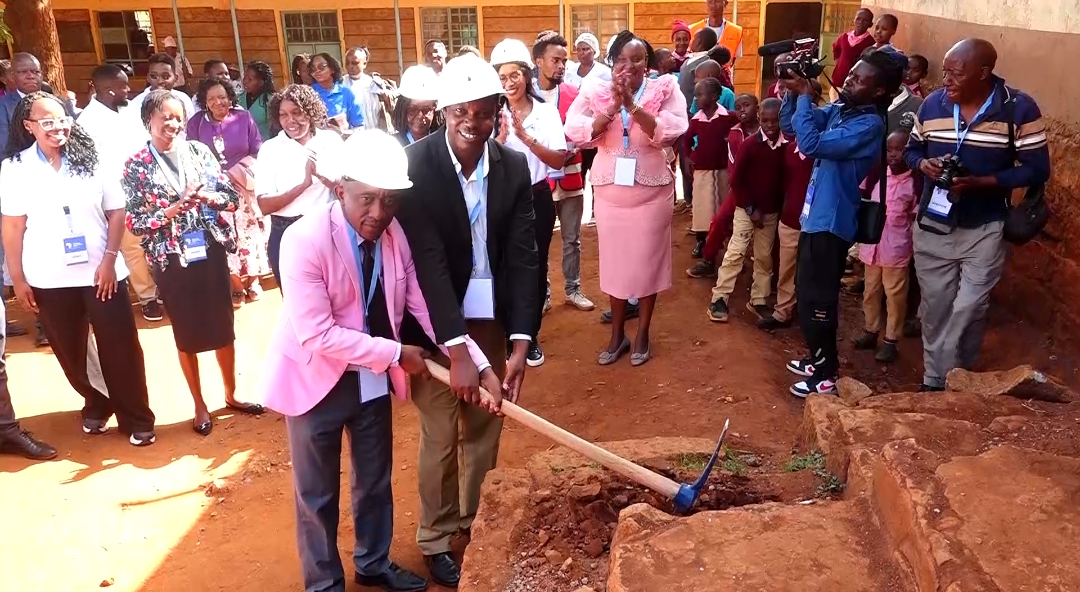
A transformative step toward bridging Kenya’s digital divide is underway following the groundbreaking of a Smart Library at Mbukoni Primary School, spearheaded by Women in Technology and Innovation Africa (WITIA).
The facility, estimated to cost between KSh 6.5 million and KSh 7.5 million, will be equipped with computers, internet access, and modern digital learning resources aimed at enhancing literacy and access to technology in underserved communities.
WITIA Founder and Chair, Eunice Pohlmann, described the project as part of a broader mission to address systemic gaps in education through early exposure to technology. She noted that the Mbukoni facility marks the organisation’s second smart library, following a successful pilot in Nkaimurunya, a settlement near Karen.
“We are focusing on education because it is the foundation. Access to digital tools and modern learning materials will significantly improve education outcomes and better prepare learners for a fast-paced, technology-driven world,” she said.
Pohlmann emphasized that access to up-to-date digital content will replace reliance on outdated textbooks, enabling learners to keep pace with evolving knowledge and skills. She added that the initiative aligns with the government’s digitisation agenda, where services such as eCitizen increasingly require digital literacy.
Dr. Bella Namango, a member of WITIA’s advisory board, termed the initiative a critical milestone in narrowing the digital knowledge gap, particularly in rural settings.
“Smart libraries are central to our mission. Introducing technology at an early stage nurtures creativity and innovation, which can be developed further as children grow,” she said.
Residents of Mbukoni have welcomed the project, citing its potential to transform both learning and livelihoods.
Faith Mutua, a parent in the area, said the initiative would benefit her children, some of whom have progressed through school without any exposure to computers.
“My child in Form Four has never studied computer before. Others in lower grades have also lacked that opportunity. This project will change that and equip them with essential skills,” she said.
Another parent, Lydia Mbinya Kennedy, highlighted the broader community impact, noting that the facility could also empower adults, particularly mothers, to acquire digital skills.
“This is not only for children. As parents, we also want to learn. Our children can help us, and we hope to be trained as well,” she said.
Once complete, the Smart Library is expected to serve as a hub for digital learning, offering structured computer classes, internet access, and continuous monitoring to ensure sustainability and impact.
The project underscores growing efforts by non-state actors to complement government initiatives in expanding access to digital education, particularly in marginalised communities where such resources have remained out of reach.