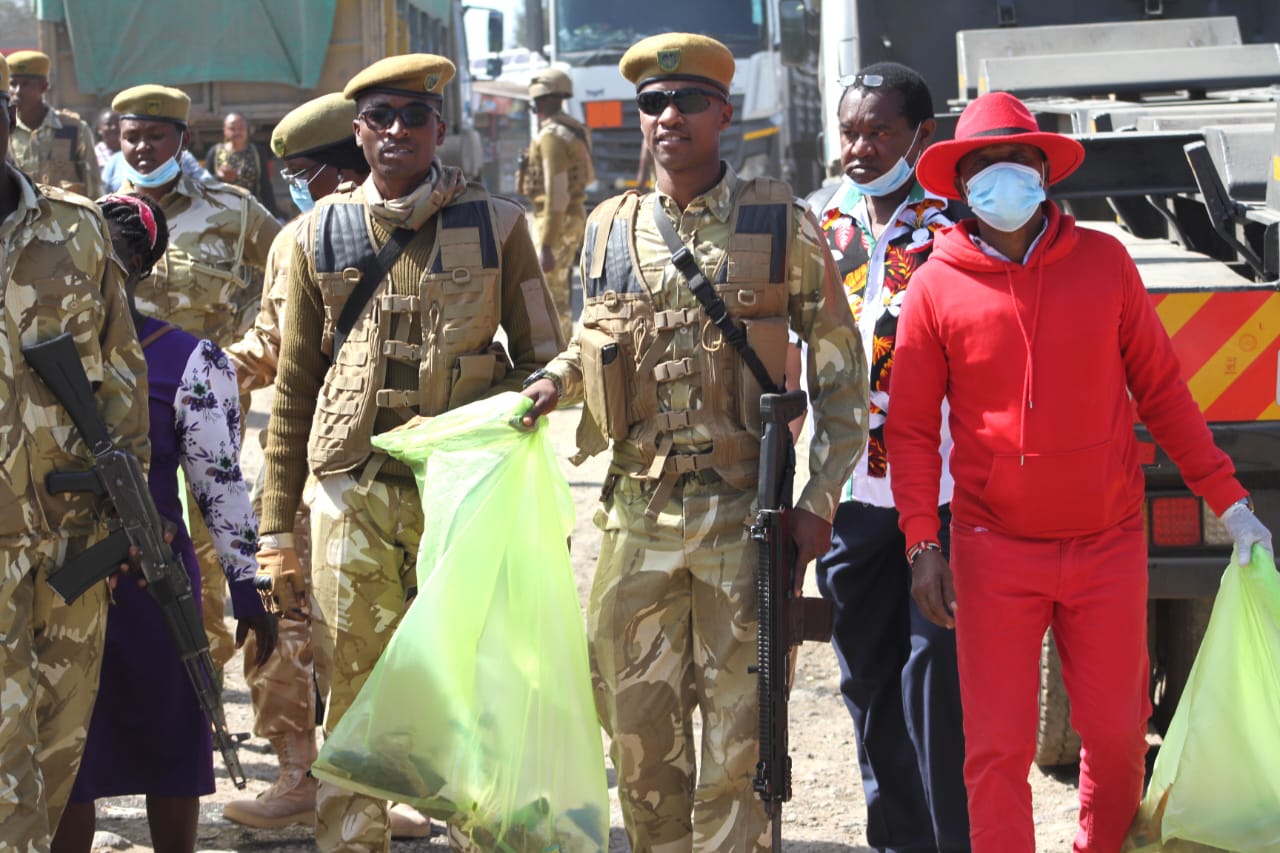
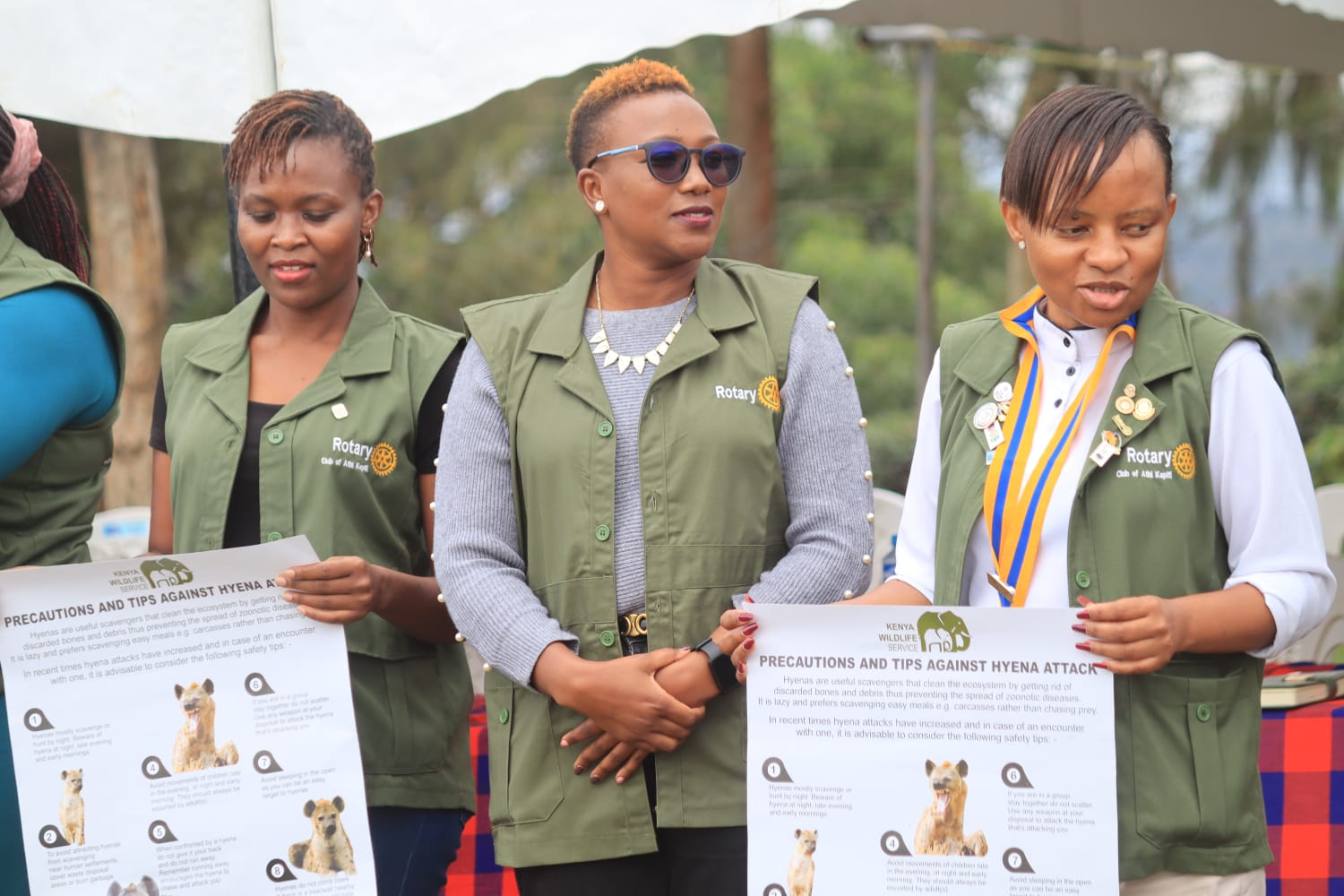
 KWS Officers training Pupils and residents of Kyasila Area in Mua On how to respond Safely to Hyena Attacks. Photo by Virginia Siebella


By Virginia Siebella.
The Rotary Club of Athi Kapiti, in partnership with the Kenya Wildlife Service (KWS), has intensified efforts to address rising cases of human–wildlife conflict in Kyasila area of Mua, Machakos County.
The initiative aims to protect schoolchildren and the wider community while promoting safe coexistence with wildlife following a surge in attacks linked to prolonged drought conditions.
Speaking during a community outreach session at Kyasila Primary School, Rotary Club of Athi Kapiti President Silvia Njambi said the program focuses on equipping learners with practical knowledge on how to stay safe in areas prone to wildlife encounters.
During the session, Rotary officials conducted practical demonstrations with pupils, taking them through simulated scenarios of hyena attacks and teaching them how to respond safely. Learners were advised to always walk in groups, avoid isolated paths, and remain alert when moving through areas known to have wildlife activity.
Kenya Wildlife Service Southern Conservation Area Deputy Director Joseph Dadacha acknowledged the seriousness of the situation, emphasizing that protecting human life remains a priority for the agency.
He explained that the severe drought experienced between 2022 and 2023 significantly worsened the conflict as predators such as hyenas and leopards struggled to find food in the wild.
“When wildlife lacks prey in their natural habitats, they are forced to venture into human settlements in search of food, which increases the risk of attacks,” Dadacha said.
To mitigate the risk, KWS has advised several safety measures, including ensuring children walk to school in groups rather than alone and encouraging parents to escort younger pupils to and from school. Residents have also been taught basic defensive actions, such as targeting a hyena’s face if confronted, in order to scare it away.
Dadacha also cautioned residents against hunting wild animals, warning that reducing natural prey further drives predators into villages.
Kyasila Primary School Head Teacher Rebecca Ngina said the school has already implemented new safety rules following the growing threat.
“No child is allowed to come to school alone. Younger pupils must always be accompanied by older learners,” she said.
Despite the ongoing interventions, residents say they continue to live in fear due to repeated wildlife attacks that have left families devastated.
Some families have lost livestock, while others are struggling to care for relatives who suffered serious injuries during attacks.
Agnes Mutuku narrated how her 25-year-old only son was mauled by a hyena in December 2023 and has never fully recovered. Another resident, Eunice Munyao, lost ten sheep in separate attacks, leaving her without a source of livelihood.
Similarly, James Musau said nine of his sheep and two calves were killed by predators despite efforts by authorities to set traps in the area.
Mua Location Chief Albanus Ndeti confirmed that since 2022, at least four serious incidents have been officially reported, including the death of a secondary school student and the mauling of a three-year-old child.
The continued attacks have forced some families to send their children to boarding schools at a young age for safety. Others now keep their dogs locked indoors at night and remain constantly alert.
Residents are now calling for stronger measures to protect their lives and livelihoods, arguing that while wildlife conservation remains important, the safety of communities living near wildlife habitats must also be guaranteed.
The prolonged drought of 2023 is widely believed to have fueled the surge in attacks, as predators increasingly strayed from their natural habitats in search of food.