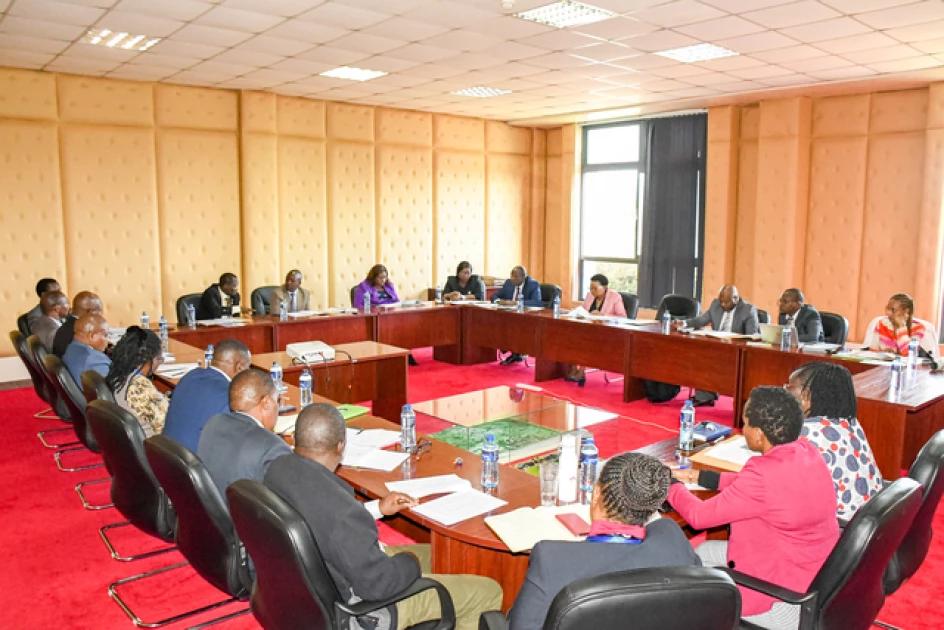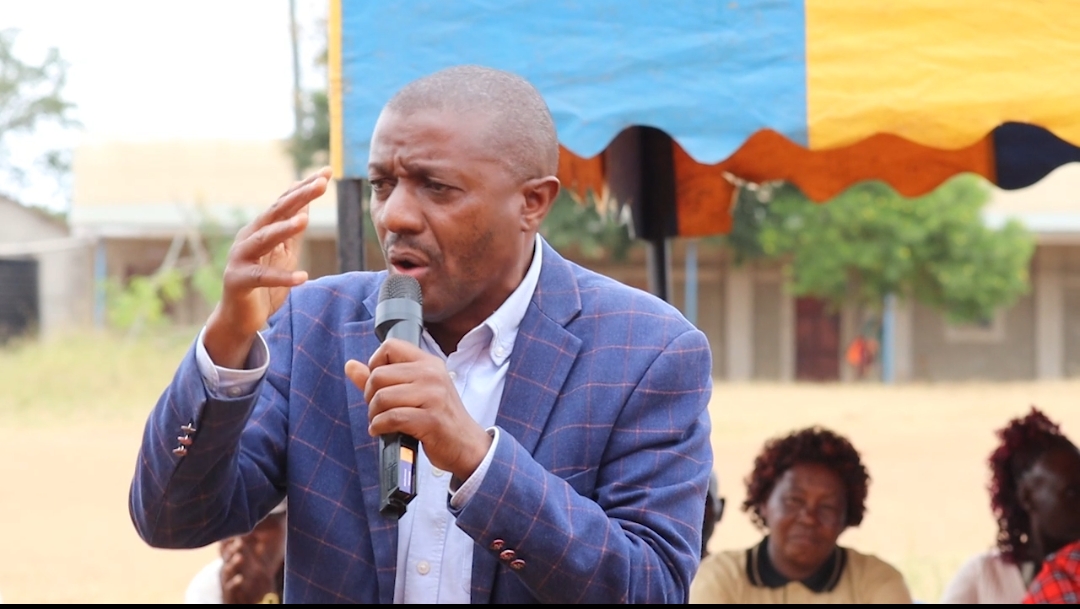
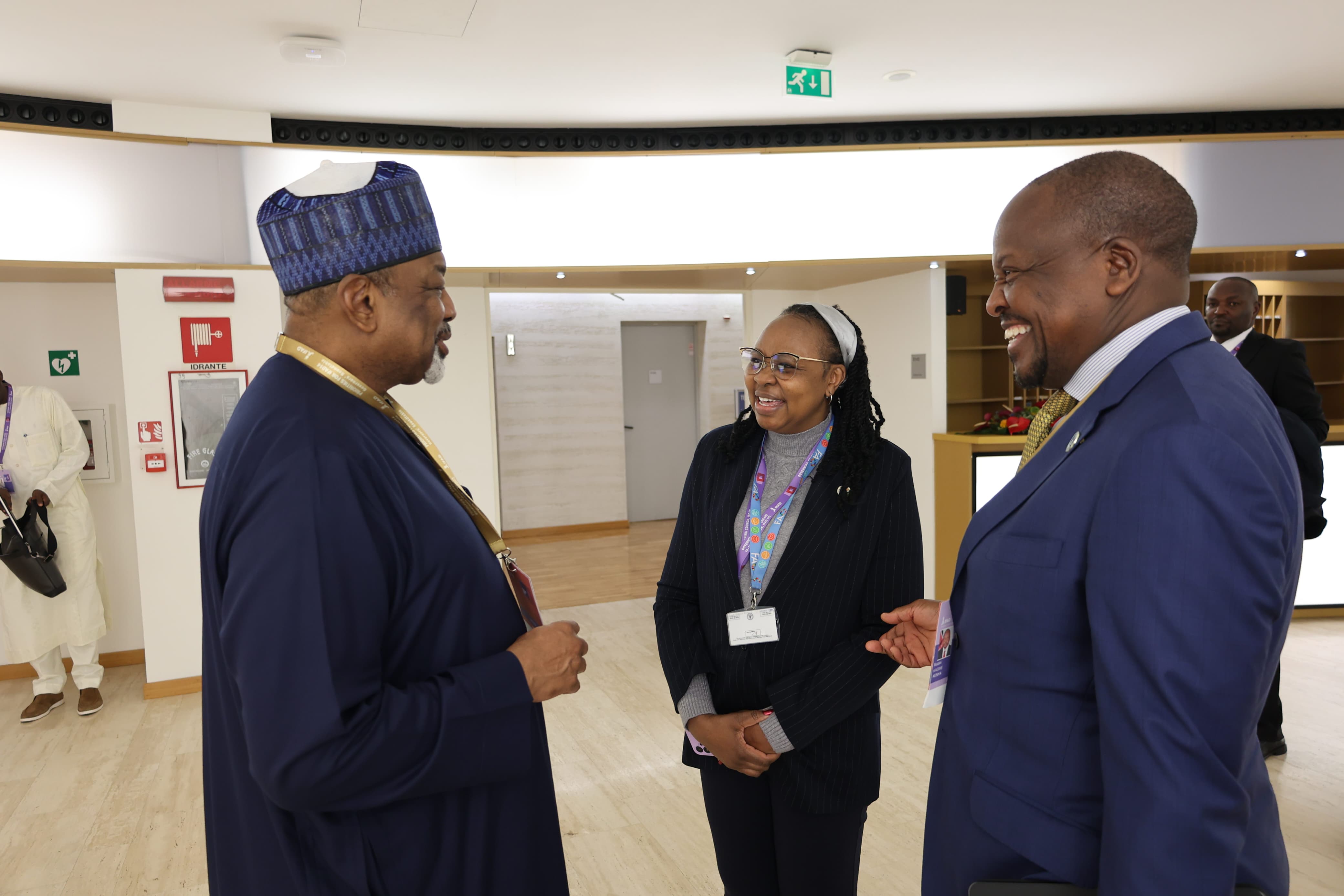
 Agriculture and Livestock Development Cabinet Secretary, Sen. Mutahi Kagwe, held a high-level bilateral meeting with Nigeria’s Minister of Agriculture and Food Security, Abubakar Kyari on the sidelines of the 49th Session of the IFAD Governing Council on February 12, 2026. Photo Courtesy.


By Andrew Mbuva.
Agriculture and Livestock Development Cabinet Secretary, Sen. Mutahi Kagwe, held a high-level bilateral meeting with Nigeria’s Minister of Agriculture and Food Security, Abubakar Kyari, who also serves as Chair of the International Fund for Agricultural Development (IFAD), on the sidelines of the 49th Session of the IFAD Governing Council.
The two leaders explored strategic areas of collaboration between Kenya and Nigeria, with a focus on the potential importation of urea fertilizer to Kenya to support domestic farm production, as well as expanding export opportunities for Kenyan agricultural produce to the Nigerian market. The engagement signals a deliberate effort to strengthen intra-African agricultural trade and build resilient continental value chains.
Kenya has traditionally sourced a significant proportion of its fertilizer and agricultural inputs from global markets outside Africa. However, recent geopolitical tensions, including the Russia-Ukraine war, disrupted global supply chains, drove up fertilizer prices, and highlighted the risks of over-reliance on extra-continental sources. The current engagement presents an opportunity to deepen intra-Africa trade under the African Continental Free Trade Area (AfCFTA) framework.
Nigeria, as one of Africa’s leading urea fertilizer producers, presents a strategic and reliable partner for Kenya. Importing fertilizer from Nigeria would stabilize supply, reduce vulnerability to global shocks, and promote regional industrial linkages. It would also advance Africa’s self-sufficiency in agricultural inputs while lowering logistical risks associated with distant markets.
On trade, Kenya’s exports to Nigeria—currently including tea, horticultural produce, processed foods, beverages, pharmaceuticals, and manufactured goods—have been steadily growing but remain below their full potential.
With Nigeria’s population exceeding 200 million and a rapidly expanding middle class, the market offers significant opportunities for Kenyan tea, fresh produce, value-added agricultural products, and agri-processed goods. Both leaders emphasized that removing non-tariff barriers and strengthening trade facilitation mechanisms will be critical in unlocking this potential.
The bilateral discussions align with Kenya’s broader food security and market expansion strategy, particularly amid climate shocks, rising production costs, and volatile global markets. They also complement Kenya’s strong partnership with IFAD. Speaking during the Governing Council session, CS Kagwe reaffirmed Kenya’s commitment to youth agripreneurship, climate resilience, livestock transformation, and rural enterprise development.
Kenya’s ongoing IFAD-supported portfolio spans aquaculture (ABDP), livestock commercialization (KeLCoP), rural financial inclusion and green finance (FINFA), and the Integrated Natural Resources Management Programme (INReMP), totaling US$581.9 million in IFAD financing within an overall portfolio value of US$1.246 billion. INReMP, with US$126.8 million in IFAD financing and a total investment of US$262.7 million, is the largest IFAD-supported programme in Kenya’s history and plays a central role in ecosystem restoration and climate resilience.
Kenya has also demonstrated strong commitment to IFAD, doubling and fully paying its US$2 million contribution to IFAD13 and advocating for an ambitious IFAD14 replenishment prioritizing climate financing, youth employment, rural enterprise growth, and blended financing models.
The Kenya–Nigeria engagement therefore represents more than a bilateral discussion; it marks a strategic alignment between two major African economies to strengthen food security, deepen agricultural trade, promote fertilizer self-reliance within the continent, and leverage regional partnerships to transform Africa’s agricultural future.