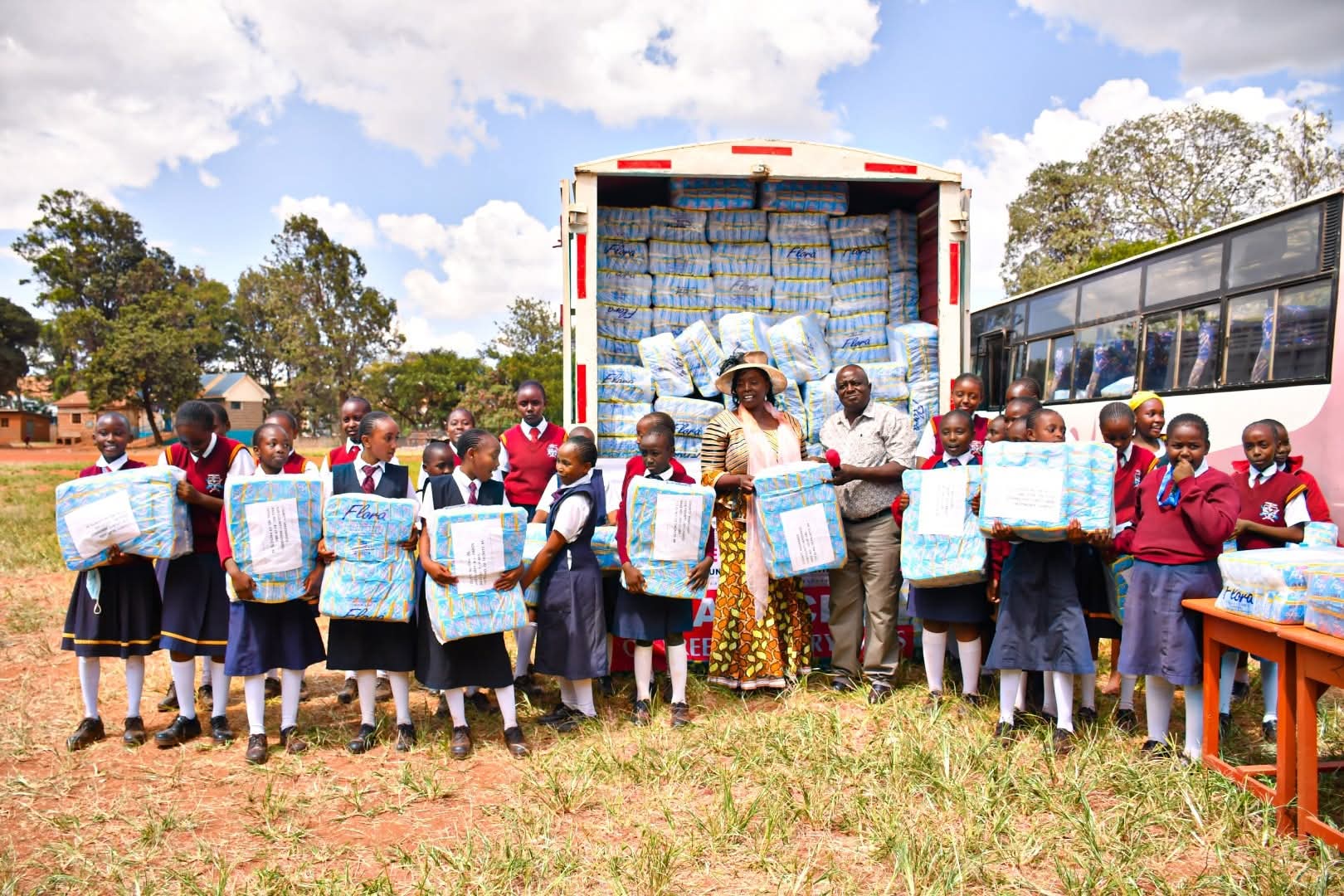
 Machakos County Woman Representative Kamene Kasimbi during the Launch of distribution of sanitary pads at Muumandu Primary and Junior School in Machakos Sub-County on January 19, 2025. Photo by Andrew Mbuva.


By Andrew Mbuva.
Machakos County Woman Representative Kamene Kasimbi has raised concerns over what she termed as chronic underfunding and delays in the procurement of sanitary towels for school-going girls, warning that such setbacks threaten gains made in keeping the girl child in school.
Speaking on Monday during the distribution of sanitary pads at Muumandu Primary and Junior School in Machakos Sub-County, Kasimbi said the initiative goes beyond the provision of hygiene products and is central to restoring dignity, promoting health and safeguarding the education of girls.
“This programme is not just about distributing sanitary towels. It is about dignity, health, education and equality,” Kasimbi said, noting that lack of access to menstrual hygiene products continues to expose girls to absenteeism, health risks and social exclusion.
She emphasized that menstruation is a natural biological process, yet stigma, inadequate sanitation facilities and unaffordable sanitary products continue to negatively affect the wellbeing and academic progress of millions of girls.
Kasimbi revealed that women representatives from all the 47 counties had successfully pushed for increased funding for the sanitary pads programme in the 2024/2025 national budget, resulting in an allocation of Sh947 million meant to supply sanitary towels to girls in schools across the country.
However, she expressed frustration that seven months into the financial year, the programme had not taken off as expected.
“We were shocked to discover that within that period, sanitary towels had not been procured. That is when we stormed the relevant offices to demand action,” she said.
The Woman Representative further disclosed that out of the Sh947 million allocation, Sh477 million was diverted to clear pending bills, leaving only about Sh440 million for the actual purchase of sanitary towels.
“This clearly shows that even if all pending bills were cleared, the amount left is not sufficient to adequately serve all girls in need,” Kasimbi lamented, describing the situation as a major setback to menstrual health interventions.
She warned that underfunding and delayed implementation undermine efforts to keep girls in school, especially those from disadvantaged backgrounds, and risk reversing progress made in promoting gender equality in education.
Kasimbi called on the national government to ring-fence funds allocated for the programme to prevent diversion and ensure timely procurement and distribution. She also appealed to development partners, volunteers and well-wishers to support the initiative.
“This is a programme we intend to roll out across all nine sub-counties in Machakos. We must work together to ensure no girl misses school because of her menstrual cycle,” she said.
The MP reiterated that access to sanitary towels is not a luxury but a basic necessity, adding that empowering girls through proper menstrual hygiene management is key to breaking cycles of disadvantage and opening doors to future opportunities.
She thanked the National Government Affirmative Action Fund (NGAAF) and other partners for their support, urging sustained commitment to keeping the girl child in school “through thick and thin.”