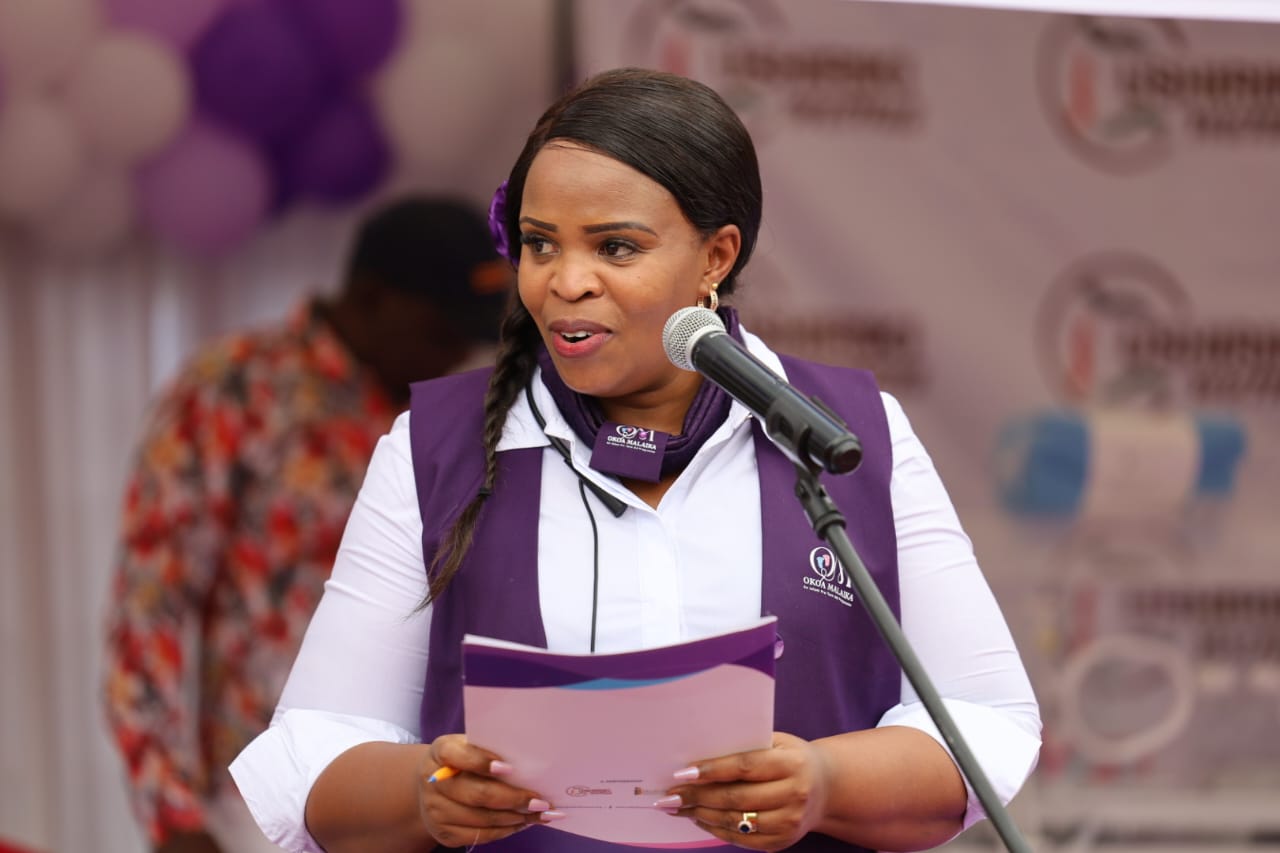
 Okoa Malaika Brand Ambassador Ms. Njoki Mambo Speaking during the celebrations of the World Prematurity Day in Makueni. Photo by Komu Musango.


By Andrew Mbuva
A renewed call to protect Kenya’s most vulnerable newborns echoed across Makueni County as the Okoa Malaika Programme marked its second anniversary during the 2025 World Prematurity Day commemoration.
Speaking during the celebrations of the World Prematurity Day in Makueni, Okoa Malaika Brand Ambassador Ms. Njoki Mambo said there was an urgent need to strengthen neonatal care across the country, noting that every preterm baby “deserves a chance to survive and thrive.”
Mambo reminded attendees—including county leaders, health stakeholders and development partners—that the programme was birthed two years ago from a simple but powerful vision by Ushiriki Wema: to ensure that no Kenyan family is forced to mourn a child lost to prematurity.
According to data cited from the Kenya National Bureau of Statistics and the Ministry of Health, counties that received incubators from Okoa Malaika have recorded noticeable reductions in preterm deaths between 2023 and 2024.
For example, Bungoma County Referral Hospital reported a decline from 111 to 98 deaths, while Marsabit County Referral Hospital reduced preterm fatalities from 23 to 15 within the same period. Similar progress was observed in Isiolo and Vihiga.
Although multiple factors contributed to the improvements, Mambo affirmed that the donated incubators “played a meaningful role” in supporting newborn survival.
To date, Okoa Malaika has established a presence in 22 counties, donating lifesaving equipment and amplifying awareness on the plight of preterm infants. Each incubator, Mambo noted, “is a symbol of hope” for families—especially in rural communities where mothers often face childbirth without access to proper neonatal support.
She described the agony many parents endure when holding a premature baby struggling to breathe without the aid of medical equipment, calling it “a pain no family should bear.”
World Prematurity Day, she emphasised, serves as a reminder of Kenya’s collective responsibility to invest in modern neonatal units, empower healthcare workers, and ensure that no mother goes through pregnancy or childbirth unsupported.
“Our little angels must not be left to chance,” Mambo urged. “We must unite to reduce deaths linked to prematurity and build a country where every newborn—no matter how early they arrive—has the care they need to survive.”
The ceremony concluded with renewed commitments from stakeholders to strengthen maternal and child health services, expand access to incubators, and continue advocating for vulnerable newborns across the country.