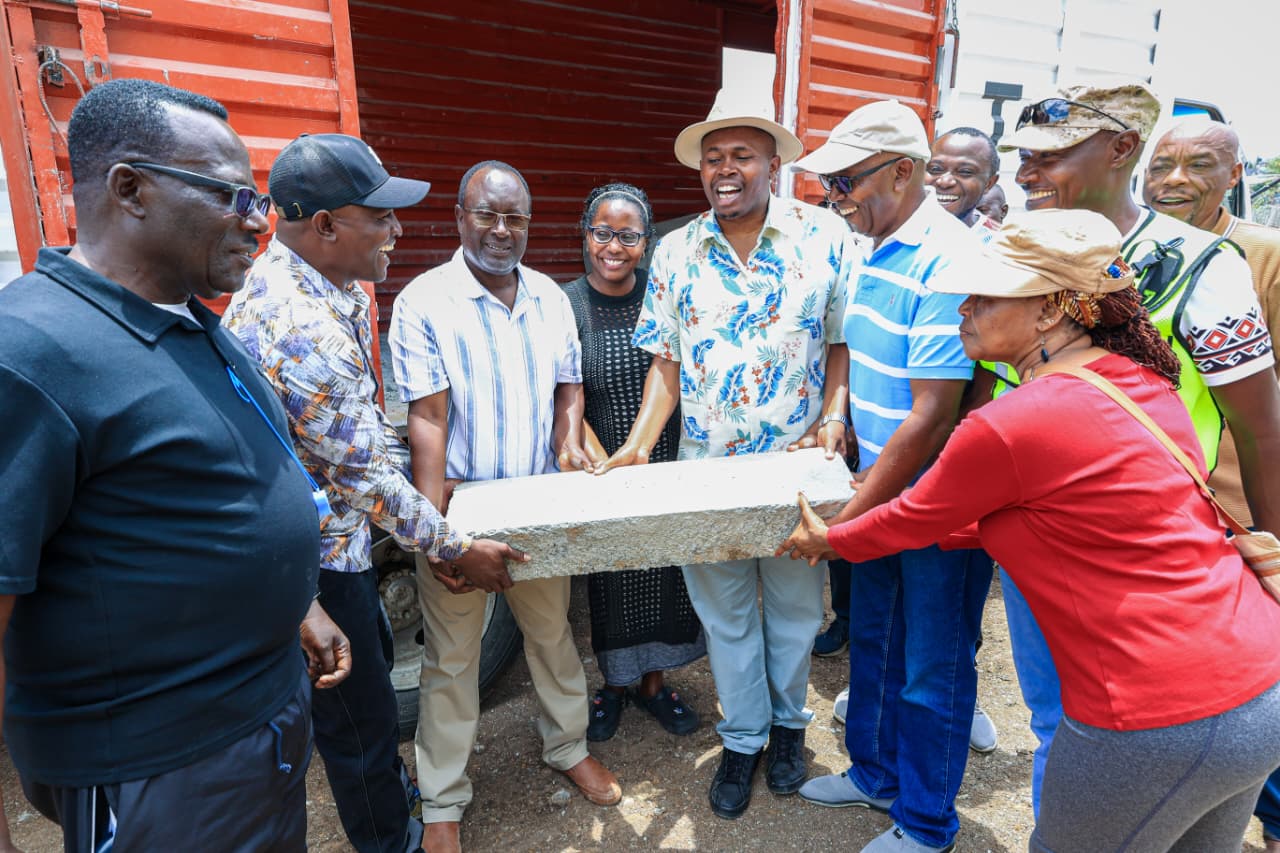
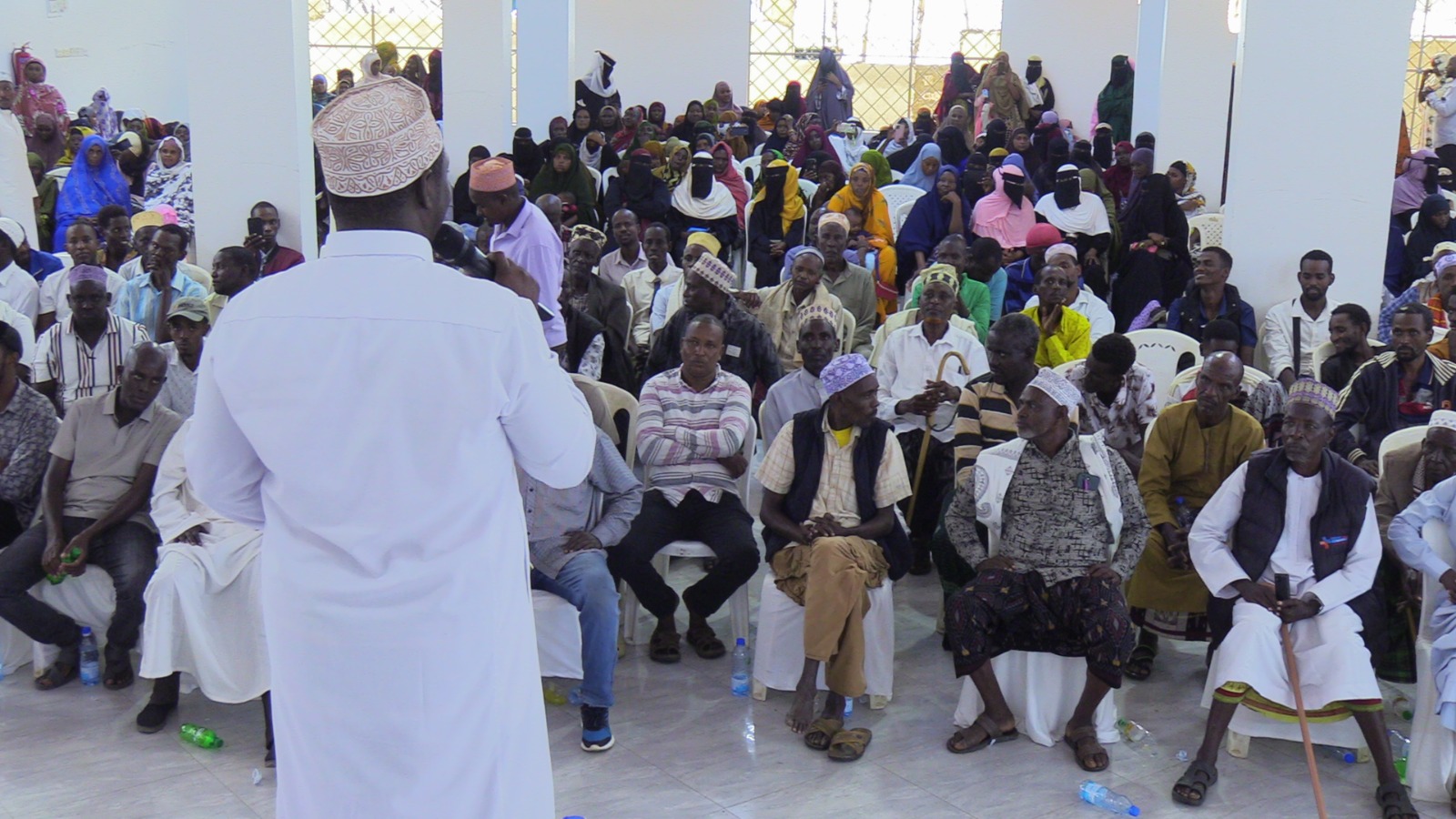
 Members of the Wardei, Orma and Borana communities converge at Tadhib hall in Malindi town, Kilifi County where they met Garsen MP Ali Warion asking him to intervene to end discrimination in issuance of national identity cards in Kilifi County. Photo by Ben Okweingoti


By Ben Okweingoti
Pastoralist communities living in Kilifi County have raised alarm over alleged discrimination in the issuance of national identity cards, claiming the practice has denied them the right to participate fully in elective politics and access government opportunities.
The communities, drawn mainly from the Wardhei, Orma and Borana tribes, accuse officials from the National Registration Bureau of continuing to subject them to vetting despite President William Ruto’s directive banning the practice.
Speaking during a meeting with Garsen MP Ali Wario at Tadhib Hall in Malindi Sub-County, community representatives said applicants whose names are associated with pastoralist communities are often directed to seek identity documents in Tana River County, even when they were born and have lived in Kilifi for generations.
Wardhei elder Sala Kulo and Orma youth representative Ahmed Yunus said the alleged discrimination had forced many residents to travel long distances to obtain IDs, register as voters and access essential government services.
Yunus said he was among those affected, explaining that officials allegedly associate names such as Adan with Tana River County and refuse to process their applications in Malindi.
“We have a problem obtaining national identity cards in Malindi, and the problem was brought about by rogue government officials several years ago. If you visit the registrar of persons’ offices and they discover your name is, for example, Adan, we are labelled as residents of Tana River County and told to seek the services there,” Yunus said.
He added that he had been forced to travel to Tana River to obtain his ID through a vetting committee and must now return to Garsen during every general election to exercise his right to vote, despite being born in Malindi.
Kulo said the situation had affected entire families, forcing him to take his children to Garsen to obtain identity cards, even though their livelihood and residence are in Malindi.
“Every general election year, I am forced to carry all my wives and children, about 25 in number, to Garsen to participate in voting. As a result, I miss out on opportunities such as bursaries for my children here in Malindi Constituency and Kilifi County because officials keep referring me to Garsen, where I am registered as a voter,” he said.
The elder urged the national government to ensure that President Ruto’s directive against vetting is implemented, saying many young people who have attained the age of 18 remain unable to acquire IDs and register as voters because of the alleged discriminatory practices.
He described the requirement for pastoralist communities in Kilifi to travel to Tana River for identity documents as “total discrimination,” warning that it was locking out a significant section of the population from civic and economic opportunities.
MP Ali Wario promised to intervene, saying he had already convened a meeting involving Kilifi elected leaders and national government officials to find a lasting solution to the issue.
Wario expressed concern that some government officers were allegedly undermining the President’s directive and warned that the continued practice could deny thousands of residents their constitutional right to identification and participation in the 2027 General Election.
“Are Kilifi and Mombasa different countries from Tana River, where vetting must be done for people to get IDs? I am very disappointed by national government officers who are defying the President and have continued with discrimination against pastoralist communities in this area,” Wario said.
He further linked the lack of identity cards and voter registration to the region’s limited influence in the allocation of national resources, urging residents to take voter registration seriously ahead of the 2027 elections.
“As a region, we have a very huge population, but many of our people do not have IDs, and those who have IDs have not registered as voters. This has denied us an opportunity to fight for our share of the national cake due to numbers. I urge my people to get IDs and register as voters,” he said.