
 The National Assembly Departmental Committee on Defence, Intelligence and Foreign Relations has called for sustained investment in the Kenya Navy to strengthen the country’s maritime security, modernise naval operations and support the growing blue economy.


By Fredrick Kioko,
The National Assembly Departmental Committee on Defence, Intelligence and Foreign Relations has called for sustained investment in the Kenya Navy to strengthen the country’s maritime security, modernise naval operations and support the growing blue economy.
The committee made the call during a comprehensive oversight visit to the Kenya Navy Headquarters in Mombasa, where members assessed the country’s maritime security posture, operational readiness, capital projects and the Navy’s overall capacity to respond to emerging threats.
Committee Chairperson Nelson Koech said Kenya’s maritime domain remains a critical strategic and economic asset that requires stronger investment and modern capabilities.
“Kenya's maritime domain represents a critical strategic and economic asset,” Koech said, noting that the Navy operates across a vast area while balancing national defence, economic security and regional stability.
He said evolving global challenges, including piracy, geopolitical competition and supply chain disruptions, have increased Kenya’s importance as a maritime anchor state in the region.
The committee was briefed on the challenges facing the Kenya Navy, particularly the gap between funding required for day-to-day operations and resources needed for modernisation.
According to the Navy, although the defence budget has increased in recent years, a significant portion of the allocation goes towards personnel costs and maintaining existing equipment and infrastructure, leaving limited resources for the acquisition of new vessels, surveillance systems and other critical capabilities.
The committee emphasised the need for sustained investment in modern equipment, advanced surveillance technology, vessels and infrastructure to enable the Navy to effectively protect Kenya’s territorial waters and respond to emerging maritime threats.
Members also received a briefing on the development of the Naval Training College into a regional centre of excellence for maritime security education. The initiative is expected to strengthen professional training, align programmes with international certification standards and promote regional cooperation in maritime security.
The lawmakers further called for stronger coordination among institutions operating within Kenya’s maritime sector, saying improved inter-agency collaboration is essential for enhanced surveillance, information sharing and coordinated responses to security incidents.
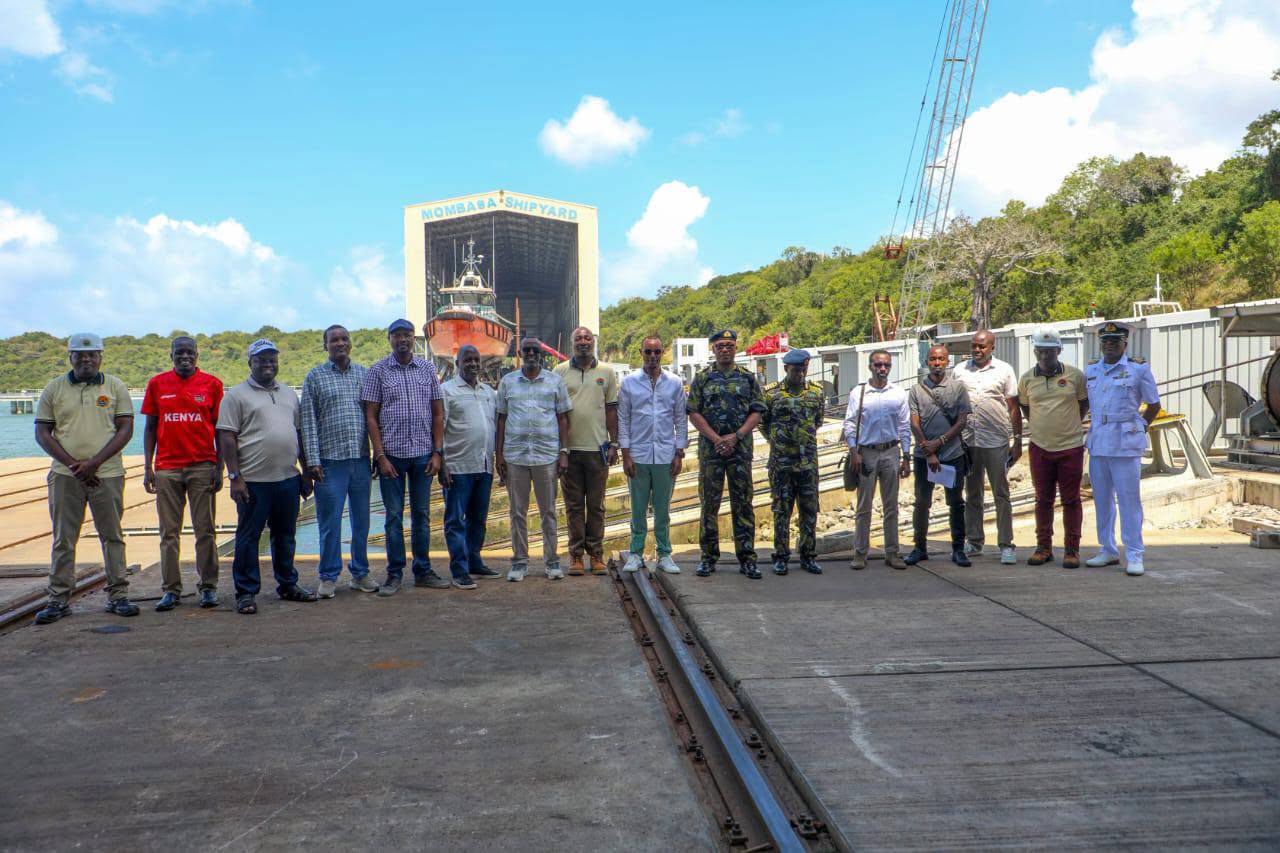
As part of the oversight visit, the committee also inspected Kenya Shipyards to assess its operational capacity, project delivery and management of public resources.
Officials told the committee that the Mombasa and Kisumu shipyard facilities are central to Kenya’s efforts to strengthen local shipbuilding, ship repair and maritime engineering while reducing reliance on foreign facilities.
The projects are also expected to create new opportunities for the growth of Kenya’s maritime industry and support the wider blue economy.
The committee said its engagement with the Kenya Navy and Kenya Shipyards was aimed at identifying the policy, institutional and budgetary support required to strengthen their expanding responsibilities and enhance Kenya’s ability to safeguard its maritime interests.