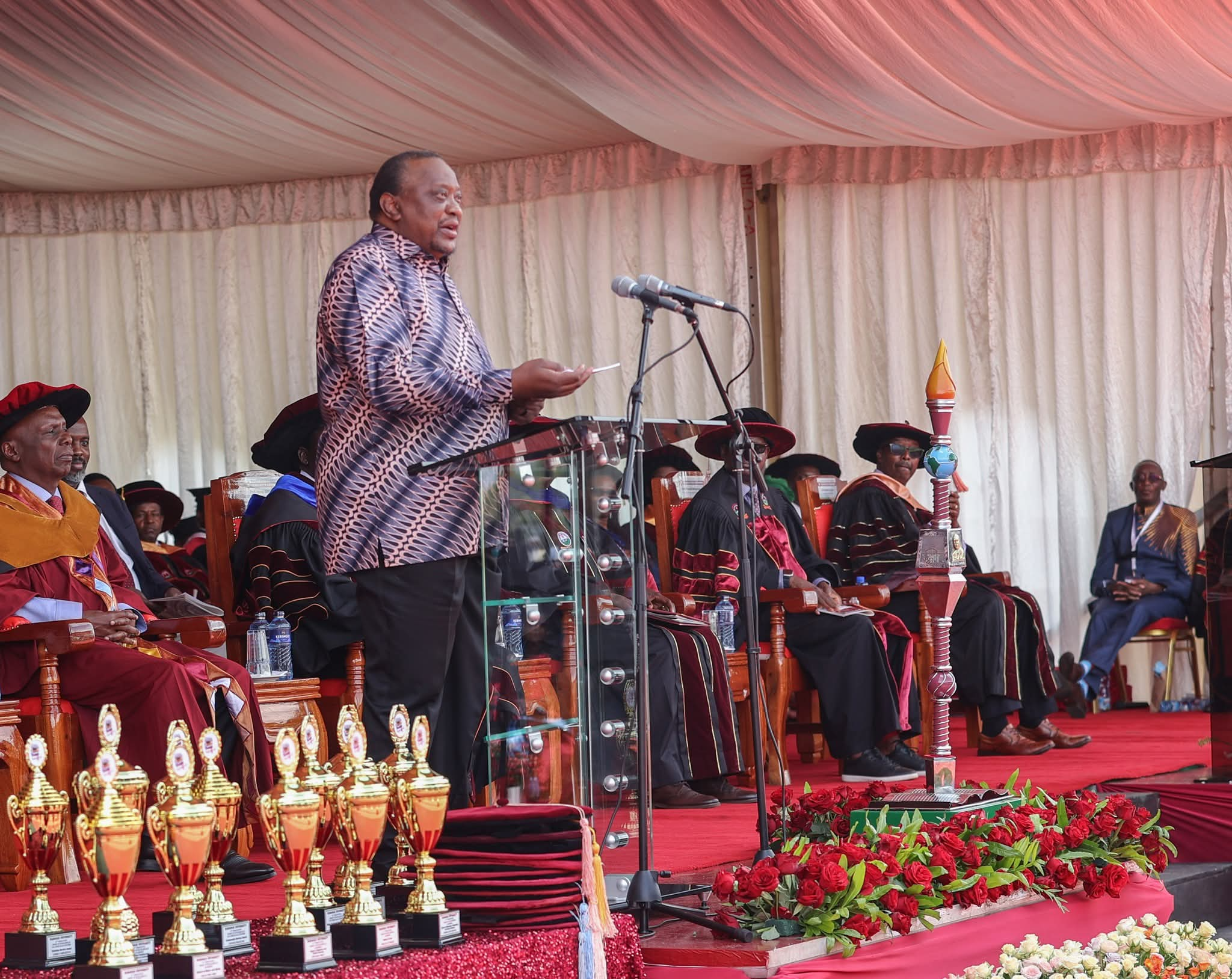
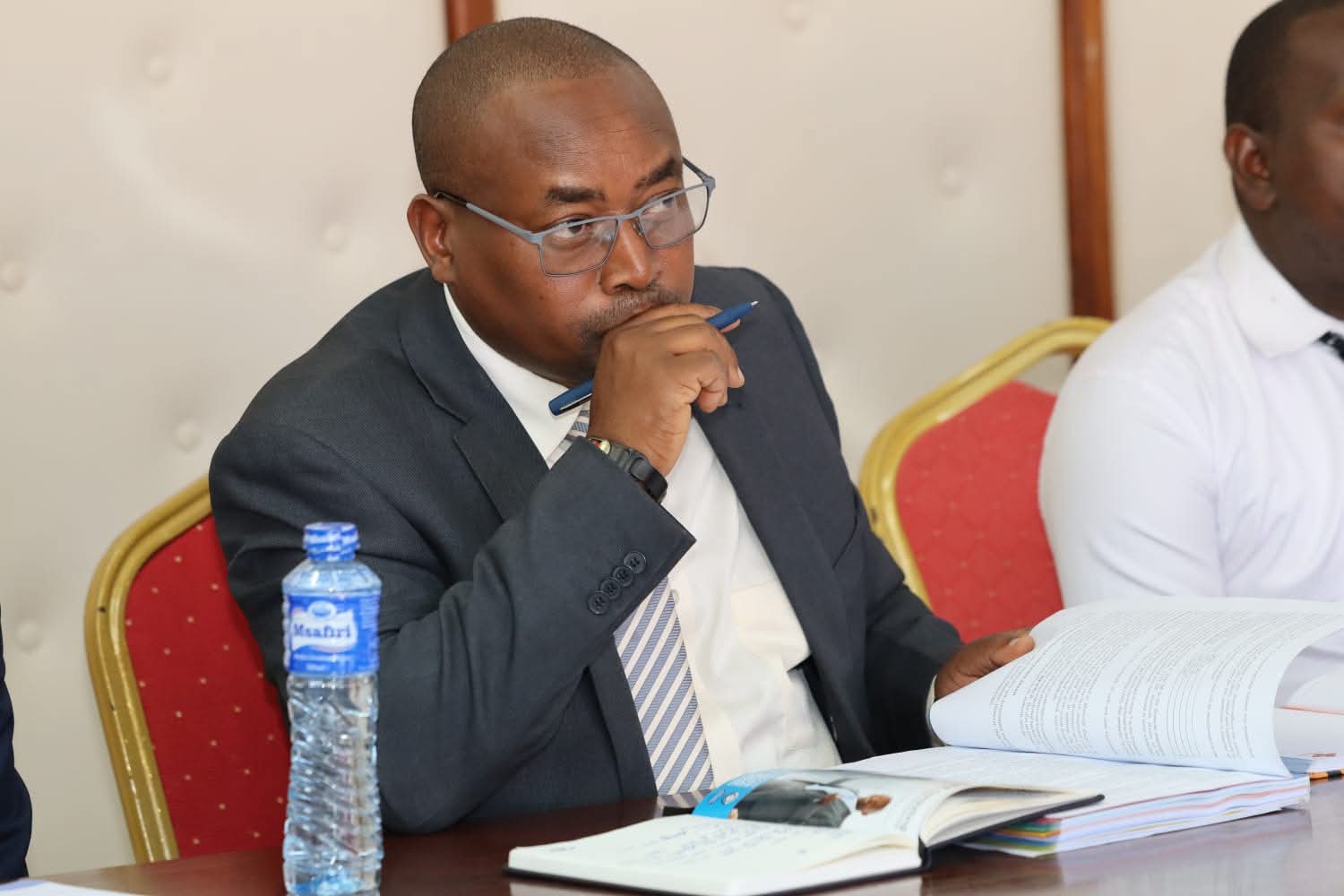
 Makueni Sand Authority Managing Director Ndambuki Kioko appearing before PIAC committee on August 26, 2026.


By Andrew Mbuva.
The County Assembly's Public Accounts Committee has put the Sand Authority on the spot over a string of financial and compliance concerns raised in the Auditor-General's Report for the financial year ending June 30, 2025.
The committee, chaired by Mavindini MCA Jonathan Kimongo, held an intense oversight session with the Authority's management as it scrutinised audit queries ranging from an unexplained Sh48.7 million variance in retained earnings to weaknesses in financial management systems, unsupported expenditure and escalating software costs.
The Sand Authority was represented by Managing Director Ndambuki Kioko, Head of Finance Dominic Kinyili, Accountant Collins Nyamai and Procurement Officer Teddy Muteti. Also present was Philip Mutai, the Deputy Director of Audit from the Office of the Auditor-General.
During the meeting, the committee strongly asserted its independence, warning the Authority's leadership against repeating mistakes highlighted in previous audit reports or relying on external institutions to clear issues raised by the Assembly.
Among the major concerns was an unexplained Sh48.7 million variance after the Authority's retained earnings dropped from Sh63.3 million to Sh14.6 million.
Auditors also questioned the continued use of a manual Excel-based cash book and delays in the implementation of an Enterprise Resource Planning system, despite the Authority having procured the system at a cost of Sh2.9 million two years ago. The system had, until recently, lacked integration with banking services.
Further audit queries included Sh3.3 million in unsupported depreciation expenses, attributed to the absence of a formal asset management policy.
The auditors also flagged Sh4.3 million collected through fines and levies, saying the revenue lacked adequate itemised supporting documentation and approved board budgets.
The Authority was further questioned over the rising cost of its Enterprise Resource Planning system, whose initial procurement has since been followed by nearly Sh5.9 million in cumulative cloud hosting and Microsoft licensing fees. Auditors noted that the expenditure was incurred without the mandatory annual performance reviews.
In response, the Sand Authority explained that the Sh48.7 million variance arose from an accounting error involving funds transferred to the County Revenue Fund, which were incorrectly recorded as income instead of transfer expenses.
The Authority also blamed delays in the rollout of the Enterprise Resource Planning system on bureaucratic processes involving its board and the County Treasury, but confirmed that banking integration has now been completed.
On the depreciation query, management said it had initially relied on National Treasury guidelines before subsequently securing formal board approval for a comprehensive finance policy.
The Authority further admitted that some required documents had not been presented to auditors on time during the audit fieldwork, contributing to some of the queries raised.
It also cited challenges in collecting revenue from commercial transporters, with some operators allegedly bypassing designated points of entry and avoiding payments.
On the escalating software costs, the management defended the expenditure, saying the charges were linked to multi-year cloud hosting and Microsoft subscriptions. However, it pledged to review the system and discontinue redundant modules in an effort to reduce costs and safeguard public funds.
Meanwhile, the Authority committed to submitting a revised Sand Authority Act to the County Assembly by the end of the first quarter, saying the proposed amendments would address persistent legal loopholes that have affected its operations.
The Public Accounts Committee said it would continue to closely monitor the implementation of the audit recommendations and measures taken by the Authority to address the financial and operational weaknesses identified in the Auditor-General's report.