
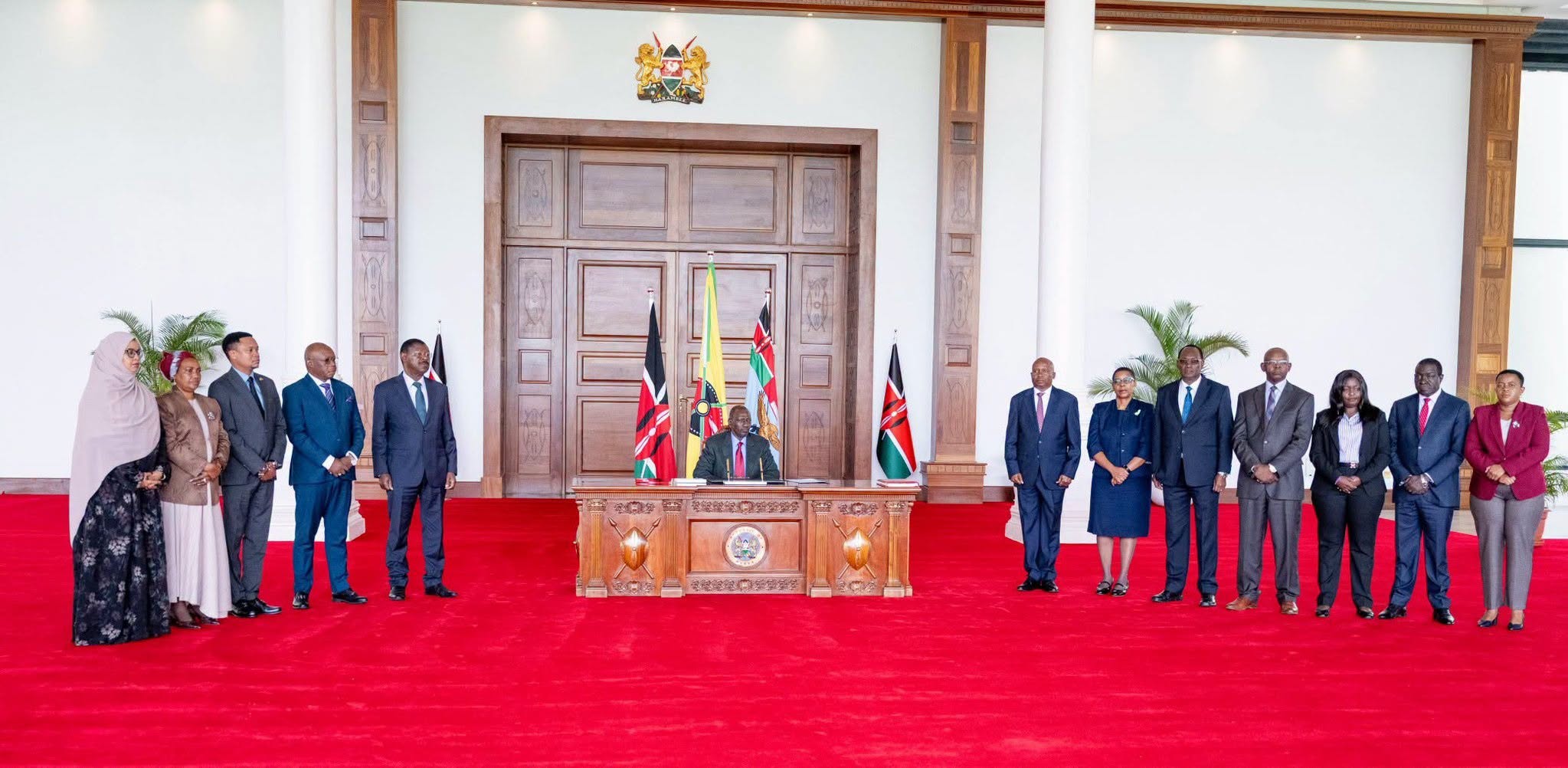
 President William Ruto has signed the Central Bank of Kenya (Amendment) Act, 2026 into law, introducing sweeping reforms aimed at strengthening financial stability, enhancing banking supervision and modernising Kenya's monetary policy framework.


By Fredrick Kioko,
President William Ruto has signed the Central Bank of Kenya (Amendment) Act, 2026 into law, introducing sweeping reforms aimed at strengthening financial stability, enhancing banking supervision and modernising Kenya's monetary policy framework.
The President assented to the legislation at **State House Nairobi>, marking a significant step in efforts to reinforce the country's financial regulatory system.
One of the key changes introduced by the new law is the requirement that nominees for the positions of Deputy Governor of the Central Bank of Kenya be vetted and approved by the National Assembly of Kenya before their appointment. The move strengthens parliamentary oversight and aligns the appointment process with that of the CBK Governor.
The legislation also updates Kenya's deposit protection framework by replacing references to the defunct Deposit Protection Fund Board with the Kenya Deposit Insurance Corporation, ensuring the law reflects the country's current institutional structure.
In addition, the Act provides greater legal clarity on the Central Bank's authority to buy, hold and trade in gold and other precious metals as part of its foreign reserve management strategy, giving the institution more flexibility in safeguarding the country's financial reserves.
President Ruto also assented to the Parliamentary Pensions (Amendment) Act, 2023, bringing parliamentary pension provisions in line with the Constitution.
The new law harmonises pension benefits for both Members of Parliament and Senators, ensuring equal treatment under the pension scheme. It also revises the legal definition of a child for pension purposes to a person below the age of 18 years.
Additionally, the legislation restructures parliamentary pension management committees to reflect Kenya's bicameral parliamentary system, streamlining governance and administration of the pension scheme.
The two new laws form part of the government's broader agenda to strengthen public institutions, improve governance and align existing legislation with the Constitution and evolving financial and administrative frameworks.