


By Andrew Mbuva.
For decades, residents of Kyuasini and Mukusu villages in Masinga Sub-county, Machakos County, endured the harsh reality of chronic water shortages, with generations growing up under the burden of searching for water.
Wells that once sustained families dried up, dams failed, and women and children were forced to walk long distances daily to fetch water from distant rivers, often sacrificing education, economic opportunities, and valuable family time.
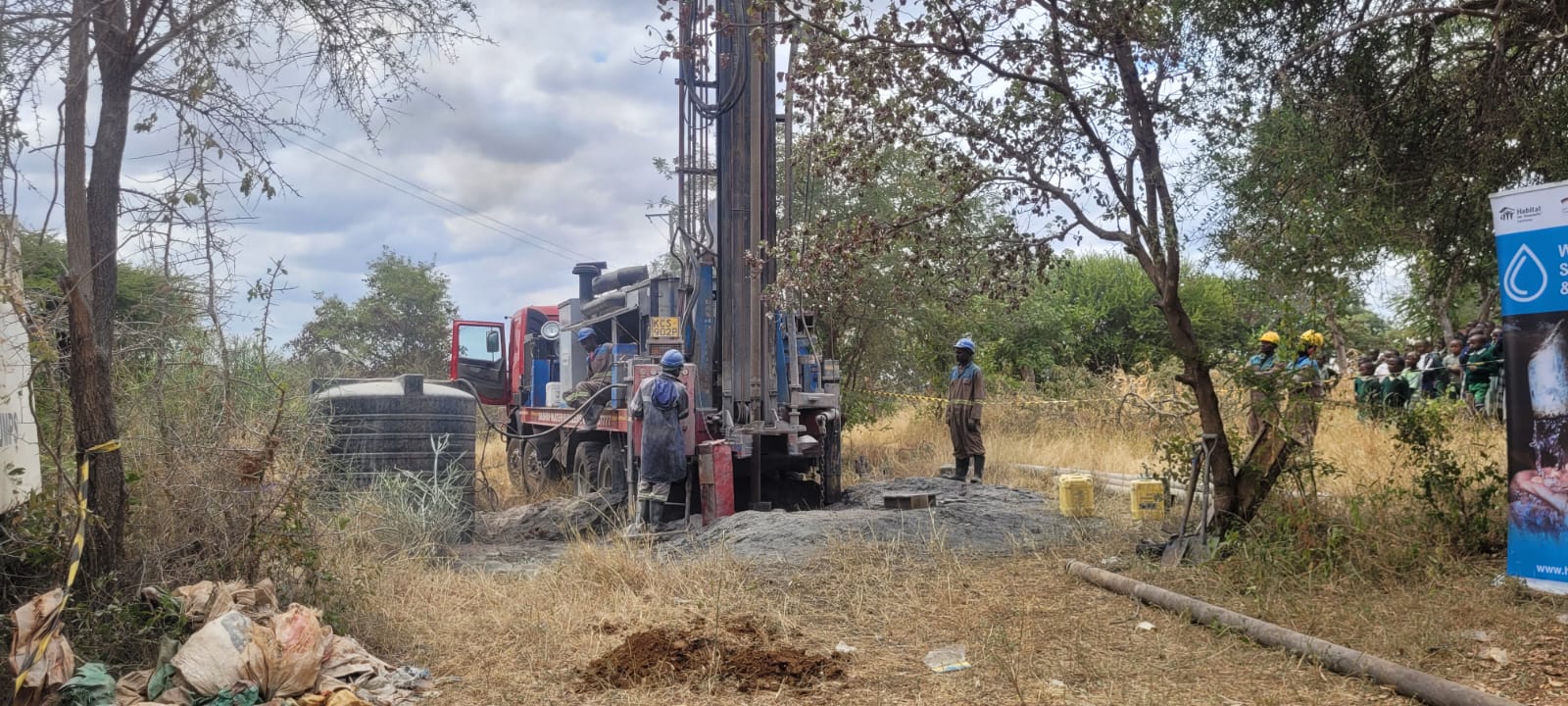
That long-standing struggle is now coming to an end following the construction of a new borehole by Habitat for Humanity through the BMZ Masinga Project, bringing clean and safe water closer to more than 3,000 residents.
The project, valued at over Sh120 million, seeks not only to improve access to water but also to enhance sanitation and strengthen livelihoods through women empowerment and agricultural initiatives.
The Mukusu borehole forms part of a broader intervention that includes the drilling of three additional boreholes in Thaatha, Musingini, and Mukusu sub-locations, alongside the rehabilitation of two existing boreholes.
The initiative is particularly significant for communities located near the Masinga Dam, yet which have historically struggled to access safe and reliable water supplies.
Residents have described the project as life-changing, saying years of hardship may finally be coming to an end.
For many families, women bore the greatest burden, often waking up before dawn or walking at night to fetch water from rivers located several kilometres away. Children were frequently required to assist in water collection, affecting school attendance and academic performance.
Kyuasini Comprehensive School Headteacher Juliana Mbithe said many learners often reported to school late, exhausted, or failed to attend altogether due to hunger and the responsibility of fetching water for their families.
She noted that the availability of water within the community is expected to improve school attendance, boost hygiene standards, and create a better learning environment for pupils.
Residents are also optimistic that improved water access will stimulate economic activities.
Francisca Kiswili, a resident of the area, expressed hope that families can now engage in productive ventures such as farming and small businesses, joking that donkeys, which have long been used to transport water, may soon become unnecessary.
BMZ Project Coordinator in Masinga, Stellamaris Mumbua, emphasized that access to clean water and sanitation must go hand in hand.
She said the project will support the construction of sanitation facilities and promote women-led farming initiatives aimed at improving household incomes and food security.
For the people of Kyuasini and Mukusu, the new borehole represents more than a water source. It stands as a symbol of restored dignity, renewed hope, and the promise of a future where access to clean water is no longer a daily struggle but a basic reality.