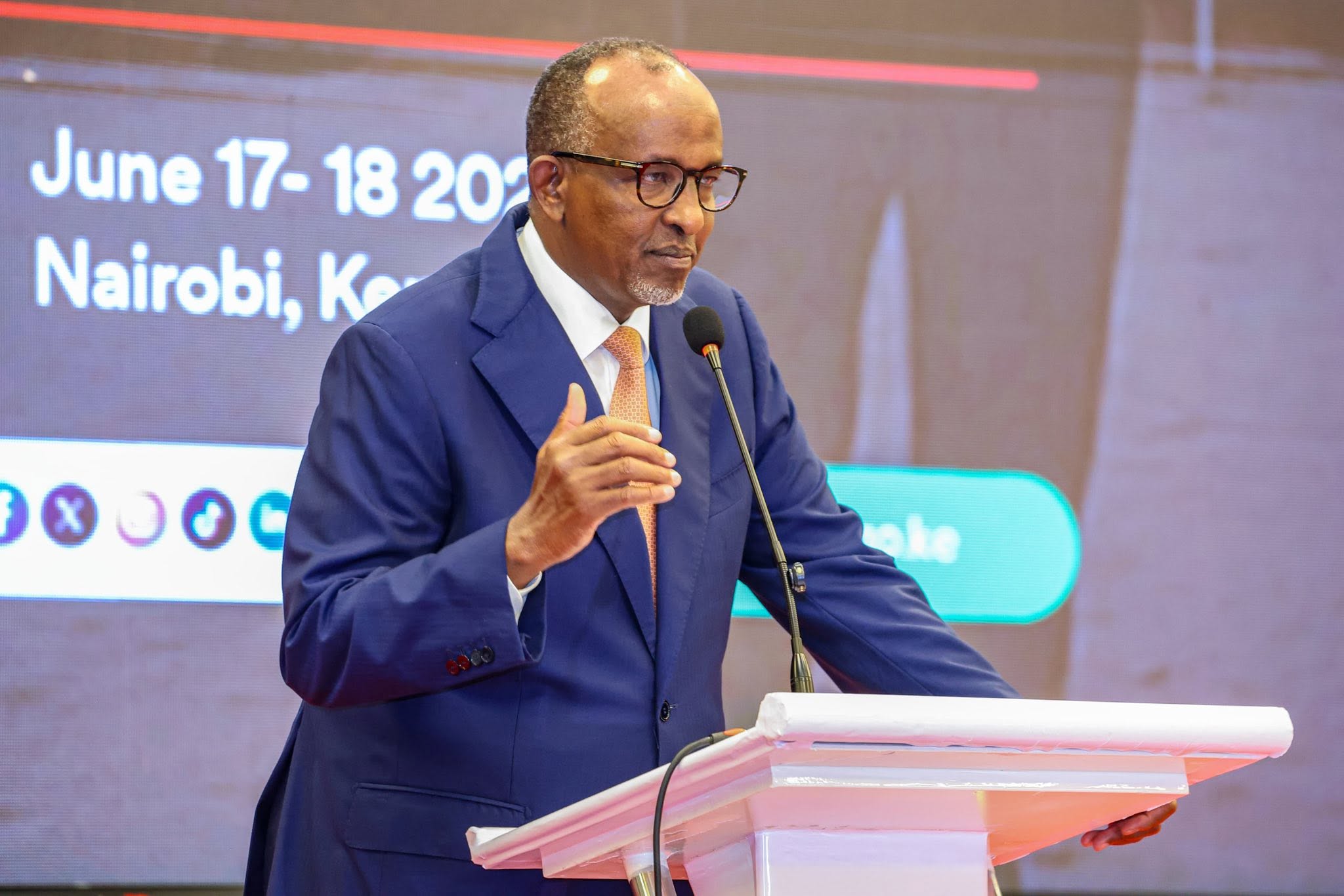
 Health Cabinet Secretary Aden Duale has launched the Kenya AIDS Integration Strategic Framework (KAISF) 2025–2030 alongside 47 County Syndemic Operational Plans, marking a major step in Kenya’s efforts to strengthen its response to HIV and other interconnected health conditions.


By Fredrick Kioko,
Health Cabinet Secretary Aden Duale has launched the Kenya AIDS Integration Strategic Framework (KAISF) 2025–2030 alongside 47 County Syndemic Operational Plans, marking a major step in Kenya’s efforts to strengthen its response to HIV and other interconnected health conditions.
The framework and county plans were unveiled during the 2026 Joint Annual Programme Review convened by the National Syndemic Diseases Control Council (NSDCC). The initiative aims to improve service integration, enhance coordination across sectors, and strengthen accountability in tackling HIV and related diseases at both national and county levels.
Held under the theme “Strengthening Evidence-Based, Multisectoral Action for Impact,” the two-day forum brought together national and county government officials, development partners, civil society organizations, community leaders, and health experts to assess progress in the country’s HIV response and chart the way forward.
A key highlight of the event was the launch of the 47 County Syndemic Operational Plans, which translate national priorities into county-specific interventions and reinforce the role of county governments in delivering equitable and responsive healthcare services.
Speaking at the event, Duale noted that Kenya has made significant gains in reducing new HIV infections, lowering AIDS-related deaths, and improving treatment outcomes. However, he stressed the need to sustain the momentum while paying special attention to vulnerable groups, including children, adolescents, and young people.
The Health CS said changing disease patterns, demographic shifts, and evolving global health financing trends require a more integrated and people-centered healthcare approach. He added that the government is strengthening Universal Health Coverage (UHC), Primary Health Care, and community health systems to ensure accessible and sustainable healthcare services for all Kenyans.
Developed through extensive consultations with county governments, development partners, and community stakeholders, the KAISF 2025–2030 builds on the achievements of previous national HIV strategies and Kenya’s roadmap towards HIV sustainability beyond 2030.
The framework recognizes the growing intersection between HIV and other health conditions such as tuberculosis, sexually transmitted infections, viral hepatitis, non-communicable diseases, and mental health disorders. It therefore promotes a coordinated approach aimed at improving service delivery, reducing fragmentation, and strengthening the resilience of the health system.
Duale also announced that the transition of UHC staff to permanent and pensionable terms will begin in July 2026 after the government allocated KSh 8.9 billion to facilitate the process, in line with a directive issued by President William Ruto.
He called on national and county governments, development partners, communities, and other stakeholders to continue working together to sustain progress towards ending HIV as a public health threat and improving health outcomes across the country.
The event was attended by Medical Services Principal Secretary Dr. Ouma Oluga, Director of Family Health Dr. Bashir Issak, Bungoma Governor Kenneth Lusaka, NSDCC Chairperson Ahmed Abass, CEO Douglas Bosire, county health executives, Members of Parliament, development partners, and other stakeholders.