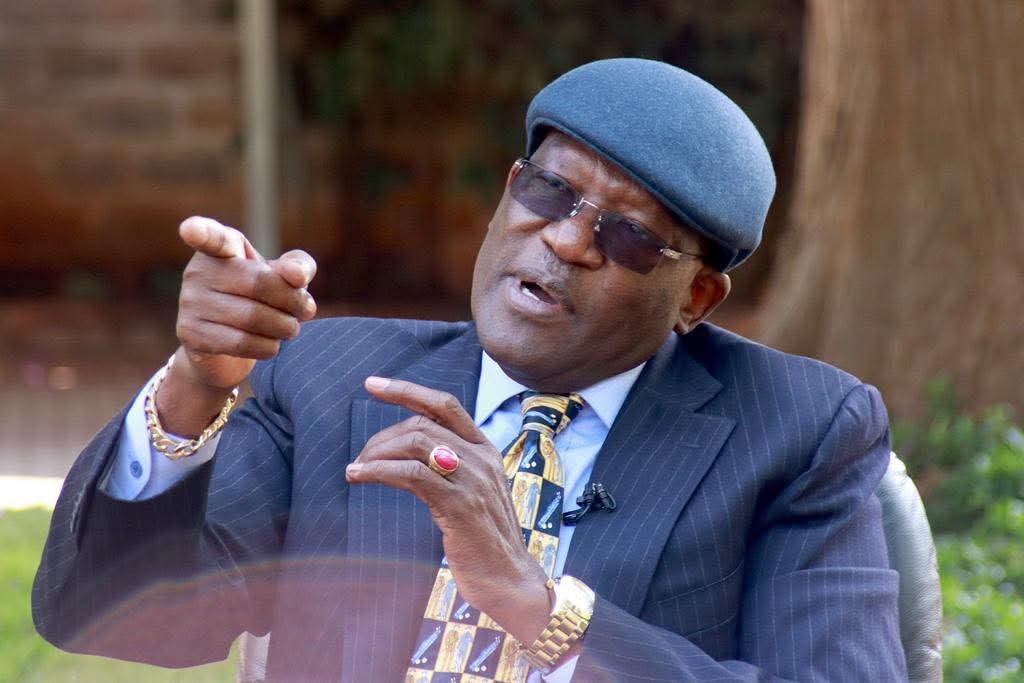
 Former Machakos Senator Johnson Muthama. File Photo.


By Andrew Mbuva
Former Machakos Senator and Parliamentary Service Commission Commissioner Johnson Muthama has issued a stern warning against the rising tide of tribal politics and inflammatory rhetoric in the country, cautioning that Kenya risks descending into instability if leaders continue to exploit ethnic divisions for political gain.
Speaking amid growing political tensions, Muthama said Africa must embrace a culture where citizens identify themselves primarily as nationals rather than members of tribes or communities, arguing that ethnic politics has been a major contributor to conflicts across the continent.
“Africa must start thinking like people in the West, where no one talks about another person's tribe or community. What we practise here in Africa has resulted in civil wars and tribal clashes,” Muthama said.
The veteran politician expressed concern over recent political developments, warning that Kenya could easily be pushed into a crisis similar to that experienced in Haiti if leaders fail to exercise restraint and responsibility.
“What we have witnessed recently leaves no doubt that Kenya can be plunged into a Haiti-like situation. God allows some people to win elections and others to lose. Those in power have a responsibility to respect those they defeated, and those who lost must equally respect those in authority,” he said.
Muthama criticized what he termed as the deterioration of leadership standards, saying many leaders have abandoned the values and principles that should guide public discourse.
He singled out remarks allegedly made by former Deputy President Rigathi Gachagua and former Kakamega Senator Cleophas Malala over the weekend, describing the language used as inappropriate and unbecoming of national leaders.
“The words that were used are unimaginable. There are parts of the human body that can be mentioned in public and others that cannot. Those words are unprintable and should never find their way into public discourse,” he said.
According to Muthama, the continued exchange of insults and abusive language at political rallies is creating uncertainty among Kenyans and fueling fears about the country's future.
“The abusive language that has been used in political meetings leaves every Kenyan confused about what is going to happen. Leaders should be careful with their words because they have the power to unite or divide the nation,” he added.
The PSC Commissioner further warned that individuals who seek power through divisive tactics often become victims of the very chaos they create.
“Those who create such situations in their country, using unorthodox and unfair approaches to topple others from power, never live to enjoy that power. They end up causing destruction to their own country and eventually become victims of their own actions,” he said.
Muthama also called upon religious leaders to take a more active role in promoting national cohesion and dismantling tribal stereotypes among their congregations.
He proposed that places of worship incorporate messages of unity into their closing prayers and benedictions as a way of reinforcing the importance of peaceful coexistence.
“It is time for the clergy to stand firm and dedicate themselves fully to convincing Kenyans to abandon tribal mindsets. Every place of worship should remind believers that they are one people, one nation, and that they should love and trust one another regardless of tribe,” he said.
Muthama emphasized that while God created different communities, all citizens share a common national identity as Kenyans.
“Anybody who tries to convince you to focus on tribe should be reminded that God created different communities but placed us in one country called Kenya. Above all else, we are Kenyans,” he stated.
His remarks come at a time when political temperatures are rising ahead of key national debates, with leaders and civil society groups increasingly calling for moderation, tolerance, and respect among political actors to safeguard national unity and stability.