


By Andrew Mbuva.
Kibwezi West MP Mwengi Mutuse has called for increased investment in water harvesting initiatives as part of efforts to reduce overreliance on rain-fed agriculture and improve household incomes in arid and semi-arid regions.
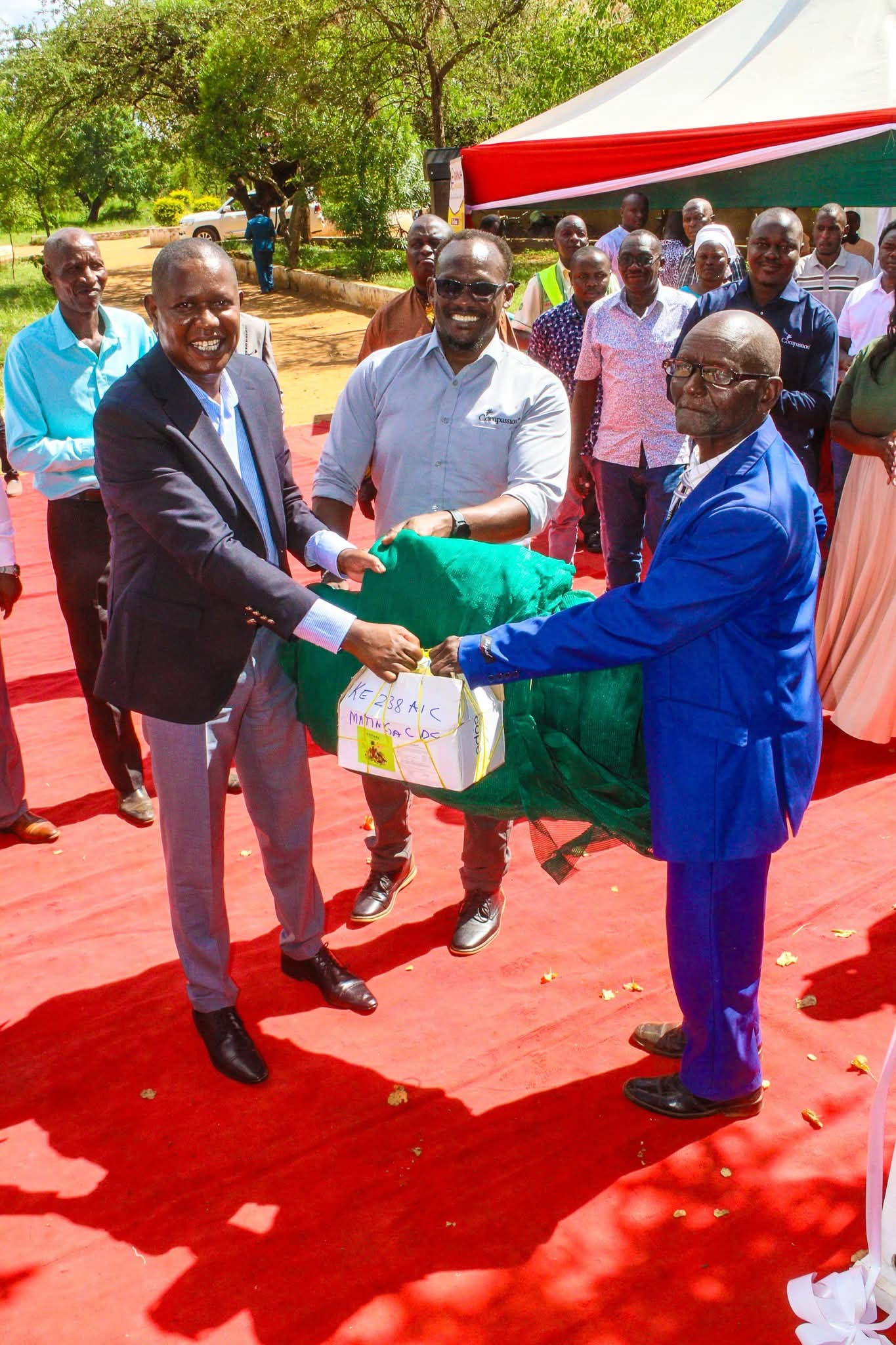
Speaking during the handover of dam liners for farm ponds to beneficiaries in Makindu, the Kibwezi West MP said sustainable water storage projects would play a key role in transforming livelihoods, enhancing food security, and reducing poverty among local communities.
Mutuse noted that the project, spearheaded by Compassion International, complements ongoing efforts by his office to support farmers through water harvesting programmes across the constituency.
“So far, we have helped 70 households in Kisingo, 60 in Muuni, 60 in Kaunguni, and 85 in Matiku to dig farm ponds. Soon, households around Kikumini will also benefit from this programme,” said the legislator.
He emphasized that diversifying from rain-fed agriculture was essential, especially in regions frequently affected by prolonged dry spells and unreliable rainfall patterns.
The MP further revealed that plans are underway to construct mid-sized dams aimed at scaling up water harvesting efforts and expanding access to irrigation water for farming households.
Mutuse praised Compassion International for its contribution towards community development in Kibwezi West, saying partnerships between government leaders and non-state actors were critical in accelerating socio-economic transformation.
“I thank Compassion International for the good work they are doing in Kibwezi West and assure them, together with other non-state actors, of my full support,” he said.
He expressed optimism that continued collaboration between development partners, local leaders, and residents would help transform Kibwezi West and contribute to broader national development goals.
The water harvesting initiative is expected to improve agricultural productivity, promote climate resilience, and provide families with reliable water sources for both domestic and farming use.